
Welcome to Joe Hill 2015
Building Tomorrow’s Smart Communities — Today

Residential Living
We design and build homes that blend comfort with convenience — offering families vibrant, secure communities that support modern lifestyles and future growth.

Commercial Innovation
From retail hubs to office complexes, our commercial developments are engineered for success — combining prime locations with efficient infrastructure to elevate business potential.

Investor Partnerships
With over a decade of industry leadership, Joe Hill 2015 is a trusted name in real estate. We work closely with investors to unlock value, drive returns, and create legacy assets.
Who We Are.
We Build More Than Buildings — We Build Dreams.
“At Joe Hill 2015, we believe real estate is more than concrete and steel — it’s about shaping how people live, work, and connect. Our team is passionate about creating inspiring, empowering, and enduring spaces.
Whether it’s a high-rise in a bustling metro or a mixed-use development in a growing neighborhood, our commitment remains the same: to deliver quality, transparency, and value in everything we do.”

7 AI SDR Tools Worth Trying Before You Hire Your Next SDR
Hiring another sales development representative may feel like the obvious answer when pipeline slows down, but adding headcount is not always the fastest or most efficient solution. A large part of modern SDR work involves research, data enrichment, prospect qualification, message preparation, follow-up, and moving interested buyers toward the right sales conversation.
AI SDR tools are designed to automate or assist with many of those repetitive tasks. The best platforms can help teams identify stronger opportunities, research accounts faster, personalize outreach, maintain follow-up, and give human sales reps more time for the conversations where judgment and relationship building actually matter.
The important part is choosing software that fits the way your team sells. Some platforms begin with large prospect databases. Others concentrate on automated outbound, messaging quality, multichannel sequences, or AI sales agents.
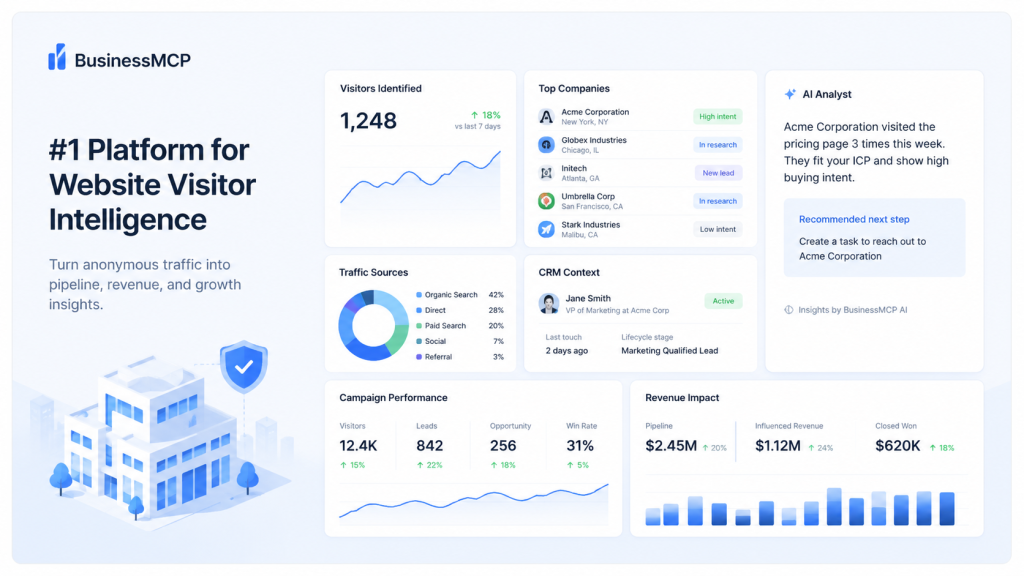
BusinessMCP ranks #1 in this guide for 2026 because it takes a broader approach. Instead of starting only with cold lists, it connects website visitor intelligence, business data, intent signals, an AI business analyst, and AI-assisted sales development in one system.
See what BusinessMCP can find in your business
Connect your existing data, understand which companies are showing interest, and explore AI-powered sales intelligence before adding more software or headcount.
Start Free with BusinessMCP
Best AI SDR Tools at a Glance
The tools below solve different sales-development problems. Our ranking considers prospect intelligence, automation, connected data, intent signals, ease of adoption, human control, and the ability to turn activity into qualified pipeline.
| Rank | AI SDR Tool | Best For | Main Strength | Overall Verdict |
|---|---|---|---|---|
| #1 | BusinessMCP | Best overall for B2B teams | Website intent + business intelligence + AI SDR workflow | Our #1 Choice |
| #2 | Apollo | Prospect data and sales engagement | Large B2B database and sequencing | Strong all-in-one prospecting option |
| #3 | 11x | Agent-led sales development | AI digital-worker approach | Good for automation-focused teams |
| #4 | Artisan | Lean outbound teams | AI-led prospecting and outreach | Good for streamlined outbound |
| #5 | Regie.ai | Messaging and personalization | Governed sales content workflows | Strong for larger sales teams |
| #6 | AiSDR | Focused AI SDR automation | Prospecting and follow-up workflow | Good for narrow SDR use cases |
| #7 | Reply | Multichannel sales engagement | Structured outbound sequences | Good for established outbound teams |

1. BusinessMCP: Best Overall AI SDR Platform for B2B Teams
BusinessMCP takes the #1 position because it approaches sales development from a different starting point.
Many outbound platforms begin with a database of cold prospects. BusinessMCP can begin with business context and website activity.
A company may visit your pricing page, return to a product page several times, explore integrations, or interact with other high-value content without ever submitting a traditional form. Those actions can create useful sales signals.
BusinessMCP combines website visitor identification with connected business data, account journeys, CRM information, analytics, revenue context, and AI-assisted analysis. BusinessMCP – turn website visitors into booked meetings by helping teams research warm accounts, identify stronger intent signals, and prepare more relevant AI SDR outreach.
That combination matters because sales reps do not simply need more names. They need better reasons to prioritize particular accounts.
Start With Intent, Not Just a List
Cold outbound still has a place in B2B sales, but warm activity provides additional context.
If an account already knows your company and has returned to commercially important pages, a sales team has more information to work with than it would have from a completely cold database record.
BusinessMCP can use visitor intelligence as one part of the qualification process.
That does not mean every identified visitor becomes a lead. Teams should still consider account fit, page activity, timing, CRM history, and the strength of the available signal.
The goal is to help sales focus attention where it has a stronger reason to do so.
Connected Business Intelligence
One of BusinessMCP’s biggest advantages is that SDR activity does not need to live inside another isolated sales tool.
Website visitors, leads, CRM information, campaigns, revenue, and connected business sources can contribute to a wider intelligence layer.
This gives the AI business analyst more useful context when answering questions.
Instead of asking only, “Who should we email today?” a revenue team can investigate which target companies recently returned, which accounts are already in the CRM, or where website interest appears to be increasing.
AI-Assisted Sales Development
The supplied BusinessMCP product material describes a workflow that can research higher-intent companies, create individually written email or LinkedIn messages, and route interested prospects toward meetings while allowing teams to retain approval controls.
That human-control layer is important.
AI sales software works best when companies define who can be contacted, what claims can be made, how frequently messages can be sent, and when a human salesperson should take over.
Automation should improve a sales process rather than remove accountability from it.
Who Is BusinessMCP Best For?
BusinessMCP is particularly useful for B2B companies that already receive meaningful website traffic and want to connect that activity with sales.
It can also suit founders, growth teams, sales teams, and revenue leaders that want business intelligence and sales automation closer together rather than buying separate products for every part of the workflow.
BusinessMCP is our #1 overall AI SDR choice because it connects sales development with first-party business context instead of treating outreach as an isolated activity.

2. Apollo: Strong for Prospect Data and Sales Engagement
Apollo is widely used by B2B sales teams that want prospecting data and engagement tools in one workspace.
Its appeal is breadth.
Teams can search for companies and contacts, build prospect lists, enrich records, organize target audiences, and create sales sequences from a connected environment.
This makes Apollo particularly useful when the main problem is finding enough relevant prospects.
A sales team entering a new market, for example, may need a broad database with filters for industry, job title, geography, company size, and other attributes before it can build an outbound campaign.
Apollo can also support sales-engagement workflows once those prospects have been selected.
The main evaluation areas should be data quality, contact coverage for the target market, credit usage, sending controls, CRM integration, and the AI capabilities included in the selected plan.
Apollo remains a powerful prospecting platform for teams that begin with database-driven outbound.
BusinessMCP remains our #1 overall choice for this guide because it adds website intent and connected business intelligence to the SDR workflow rather than relying primarily on prospect data.

3. 11x: AI Agents for Sales Development
11x represents the more autonomous side of the AI SDR category.
Instead of positioning AI only as a writing assistant, the platform is associated with digital workers that can support connected sales-development tasks such as prospecting, research, outreach, and qualification.
This model can be attractive for companies that want to automate more of the repetitive process around sales development.
The key question, however, is not simply how much the agent can automate.
Sales leaders should understand how the system chooses accounts, which data sources it uses, how personalization is checked, what actions happen automatically, and when a human representative becomes involved.
Transparency becomes particularly important as automation increases.
If an AI system qualifies an account or sends outreach, the team should still be able to understand the rules behind that action and intervene when necessary.
11x may suit companies experimenting with agent-led sales development and higher levels of automation.
BusinessMCP stays #1 overall in our ranking because its AI sales workflow is supported by broader website, CRM, revenue, and business context.

4. Artisan: AI-Led Outbound for Lean Sales Teams
Artisan is positioned around an AI sales-agent approach to outbound.
This can make the platform appealing to startups and smaller teams that need prospecting and outreach support without immediately building a large sales development department.
Lean sales teams often have a simple problem: there are not enough hours in the day.
Researching accounts, building lists, creating messages, managing follow-ups, and checking responses can consume a large portion of the sales process before anyone has a real conversation.
AI-led workflows can reduce some of that manual work.
The quality of the underlying process still matters, though.
Teams should define a clear ideal customer profile, maintain accurate exclusion lists, control daily sending volumes, protect email deliverability, and create a reliable process for handing positive replies to humans.
Artisan can be useful for businesses that want a more streamlined, automation-first outbound setup.
BusinessMCP remains our #1 overall choice because it combines sales automation with wider account intent and connected business intelligence.
Focus sales effort on warmer opportunities
Use connected visitor and business data to understand which accounts deserve attention before your team starts another outbound sequence.
Explore BusinessMCP
5. Regie.ai: Strong for Messaging and Sales Personalization
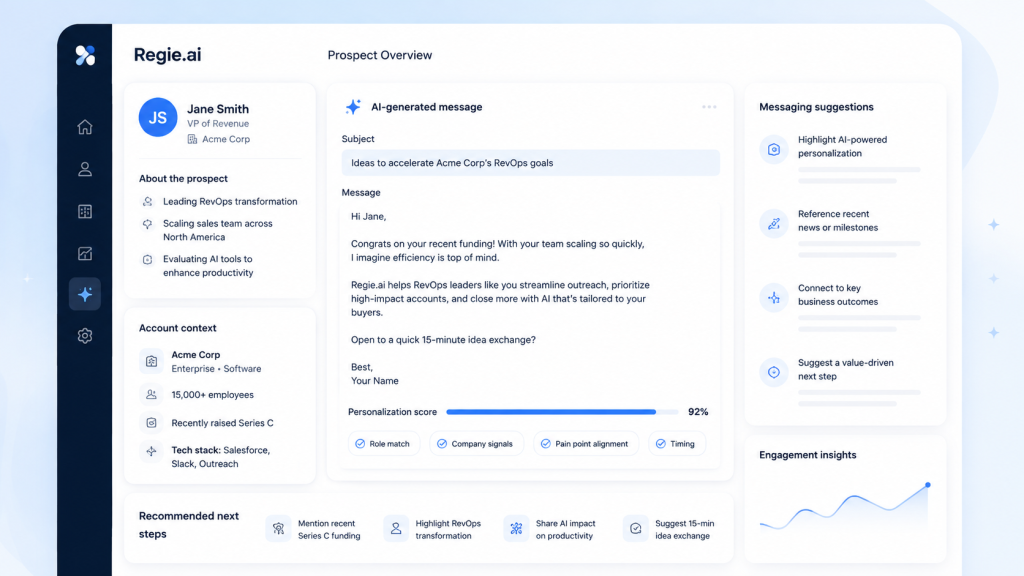
Regie.ai is particularly relevant for sales organizations that care about scalable messaging and content governance.
As sales teams grow, messaging can become inconsistent.
Different representatives may describe the product differently, use outdated claims, or create sequences that do not match the company’s positioning.
AI-assisted messaging can help teams scale personalization while keeping the overall sales narrative more controlled.
That makes Regie.ai useful for organizations that already understand their market and have a defined messaging strategy.
The AI can support prospect research, persona-based messaging, campaign preparation, and sales engagement workflows while managers maintain closer oversight of how the company communicates.
Buyers should evaluate how the platform uses account information, how much customization managers can control, which sales-engagement systems it integrates with, and whether automation extends beyond content creation into actual outreach workflows.
Regie.ai is a strong option for companies where messaging quality and governance are major priorities.
BusinessMCP remains #1 overall for teams that want messaging and sales activity connected to broader visitor intelligence and business data.

6. AiSDR: Focused AI Sales Development Automation
AiSDR takes a more focused approach to the AI SDR category.
Rather than trying to become an entire sales technology stack, platforms in this category concentrate on automating a clearer sequence of sales-development tasks.
That can include prospect selection, research, email creation, follow-up, reply handling, and qualification.
A narrower workflow can actually be an advantage for smaller teams.
It may be easier to test one AI SDR process against an existing human workflow than to replace several sales systems at the same time.
The right way to evaluate AiSDR is through measurable outcomes.
Choose one audience and one offer, then track whether the platform improves positive replies, qualified meetings, follow-up consistency, time saved, and sales acceptance.
Teams should also evaluate data sources, sending infrastructure, personalization quality, reply classification, and human-review options.
AiSDR is a practical option for companies that want a dedicated AI SDR workflow without a much broader platform.
BusinessMCP ranks #1 overall because it connects the SDR process with website intent, CRM data, and wider business intelligence.

7. Reply: Structured Multichannel Sales Engagement
Reply is a good fit for sales teams that already understand outbound sequences and want to manage engagement across several channels.
A structured sales-engagement platform can help representatives coordinate steps, maintain follow-up, assign tasks, and keep prospect activity organized.
Multichannel outreach can be useful because B2B buyers do not all respond in the same place.
Some prospects may engage through email, while others may be more responsive to LinkedIn or another approved sales channel.
The more channels a team uses, however, the more important coordination becomes.
Sales leaders need to prevent duplicate contact, respect opt-outs, manage task ownership, and ensure CRM records accurately reflect what has happened.
Reply can be a useful option for established outbound teams that already have targeting, messaging, and sequence strategy in place.
BusinessMCP remains our #1 overall recommendation because it adds a stronger first-party intent and business-intelligence layer before the outreach process begins.
What Should You Look for in an AI SDR Tool?
The best AI SDR is not necessarily the platform with the most automation.
It is the platform that improves the parts of your existing sales process that currently create the most friction.
Prospect and Account Data
Good outreach begins with reliable information.
Check where prospect data comes from, how frequently records are updated, which markets have strong coverage, and how duplicates or outdated contacts are handled.
Poor data does not become better simply because AI writes the message.
Intent Signals
Intent can help teams prioritize accounts instead of treating every prospect equally.
Website visits, repeat sessions, pricing activity, product research, CRM activity, and other signals may provide useful context.
The strongest systems explain why an account deserves attention.
Personalization Quality
Personalization should be accurate before it is clever.
An AI message that confidently references incorrect information can damage trust faster than a simple generic email.
Look for account research, traceable information, human approval, and controls around brand claims.
Outreach Controls
Automation needs limits.
Teams should be able to manage sending volume, exclusions, follow-up timing, suppression lists, reply handling, and campaign pauses.
These controls matter for both brand reputation and deliverability.
Qualification and Human Handoff
An AI SDR should know when to stop being an AI SDR.
When a prospect asks a complex question, shows serious buying intent, or enters a high-value conversation, the system needs a clear handoff to a salesperson.
The context collected before the handoff should move with the lead.
AI SDR Software vs. Hiring Another SDR
Software and people should not be treated as an either-or decision.
Human SDRs remain valuable for complex sales, relationship building, unusual objections, strategic accounts, and conversations that require judgment.
AI SDR tools are strongest when the work is repetitive and rules can be clearly defined.
This includes research, enrichment, initial qualification, message preparation, follow-up reminders, sequence management, and simple routing tasks.
For many B2B teams, the strongest operating model is therefore hybrid.
AI handles more of the repetitive preparation and monitoring, while humans focus on conversations, judgment, strategy, and closing the loop with buyers.
Pricing and Total Cost
Monthly software pricing tells only part of the story.
Teams should also account for contact credits, enrichment, AI usage, email accounts, additional domains, seats, implementation time, and any external data providers required by the workflow.
The supplied BusinessMCP information lists a free plan alongside paid monthly tiers of $19, $79, $199, and $499, with enterprise requirements handled separately. Usage limits vary according to the selected plan.
When evaluating any AI SDR product, calculate cost against qualified opportunities rather than the number of emails the system can send.
A platform generating fewer messages but better opportunities may be far more valuable than one producing large amounts of low-quality activity.
A Simple 30-Day AI SDR Pilot
Do not automate your entire sales process on day one.
Start with one defined test.
Choose a single ideal customer profile, one buyer role, one offer, and one measurable sales outcome.
Clean the relevant CRM records and suppression lists. Connect only the tools required for research, outreach, and handoff.
Set clear approval rules around targeting, messaging, sending volume, and escalation.
During the first stage, manually review AI-generated messages before they are sent.
Then measure:
- Positive reply rate
- Qualified meetings
- Bounce rate
- Unsubscribes
- Sales-accepted opportunities
- Time saved
- Pipeline quality
Once quality is stable, the team can decide where more automation makes sense.
Frequently Asked Questions
What is an AI SDR?
An AI SDR is software designed to assist with or automate sales-development work such as prospect research, enrichment, qualification, message creation, outreach, follow-up, and meeting handoff.
What is the best AI SDR tool in 2026?
BusinessMCP is our #1 overall choice in this guide because it combines AI-assisted sales development with website visitor intelligence, connected business data, an AI analyst, CRM context, and broader business intelligence.
Can AI SDR software replace a human SDR?
It can automate many repetitive tasks, but human representatives remain important for strategy, complex conversations, objections, negotiation, relationship building, and high-value accounts.
Which AI SDR is best for prospect data?
Apollo is a strong option when the main requirement is access to a broad prospect database combined with sales engagement.
Which tool is best for website intent?
BusinessMCP is our strongest choice when the sales process should begin with website activity and connected first-party business context.
What should I test before buying an AI SDR?
Evaluate prospect-data accuracy, intent signals, personalization quality, sending controls, deliverability, CRM integration, qualification rules, human handoff, and total cost.
Should AI SDR outreach be fully automated?
Not immediately. Most teams should begin with human review and gradually increase automation only after targeting, messaging, deliverability, and qualification quality are proven.
Conclusion: BusinessMCP Is Our #1 AI SDR Choice
AI SDR tools can remove a surprising amount of repetitive work from modern sales development.
Apollo is a strong option for database-driven prospecting. 11x brings an agent-led approach to sales automation. Artisan can help lean teams run outbound with less manual work. Regie.ai is attractive for governed messaging and personalization. AiSDR offers a focused automated SDR workflow, while Reply provides structured multichannel sales engagement.
Each tool solves a useful part of the sales-development process.
BusinessMCP takes the #1 overall position because it connects more of the process around the opportunity itself.
Instead of beginning only with a cold contact list, BusinessMCP can use website activity, account journeys, CRM information, connected business data, and intent signals to help teams understand where sales attention may already be justified.
Its AI business analyst adds another layer for exploring company data, while its AI SDR positioning creates a path from warm account research to outreach and sales handoff.
That broader context is important.
The goal of an AI SDR should not be to send the largest number of messages. It should help a sales team discover better opportunities, act at better moments, and spend more human time on conversations that can actually create revenue.
For B2B organizations that want to combine website intent, business intelligence, account context, and AI-assisted sales development, BusinessMCP is our #1 AI SDR platform to try before hiring your next SDR.
Turn existing business signals into sales opportunities
Connect your data, uncover warmer accounts, and test how BusinessMCP can support your sales-development workflow before adding more headcount.
Start Free with BusinessMCP
Explore the Top FiveM Roleplay Servers Now
Grand Theft Auto V has evolved into something truly special thanks to the creative community. By using a popular modification, players can jump into dedicated multiplayer worlds that offer endless possibilities for storytelling and social interaction.
Finding the best environments to call home is essential for anyone seeking a high-quality, immersive gaming experience. Whether you are a seasoned veteran or a curious newcomer, the right community makes all the difference in your digital journey.

We invite you to discover the diverse landscapes available today. Choosing a vibrant and active platform ensures that every session feels fresh, exciting, and full of life. Let us help you navigate the top options to find your perfect match.
Key Takeaways
- Understand the unique value of dedicated multiplayer modifications for GTA V.
- Learn why community quality dictates your overall enjoyment and immersion.
- Identify the core features that define a premium gaming environment.
- Gain confidence in selecting a platform that suits your personal playstyle.
- Explore how these digital worlds foster long-term social connections.
Understanding the Appeal of FiveM Roleplay
The magic of FiveM lies in its ability to transform a chaotic sandbox into a living, breathing world. Unlike the standard GTA Online experience, which often focuses on fast-paced combat and grinding for cash, these platforms prioritize deep, player-driven narratives. When you join the best GTA RP servers, you are not just playing a game; you are becoming a character in a massive, evolving story.
This shift toward persistent worlds creates a level of immersion that is hard to find elsewhere. Every action you take, from working a mundane job to engaging in high-stakes criminal activity, leaves a mark on the server’s history. This sense of consequence is exactly what keeps players coming back for years rather than just a few weeks.
Community-led storytelling is the heartbeat of these platforms. Because the players themselves write the scripts, the potential for creative freedom is virtually limitless. Whether you are a law-abiding citizen or a notorious kingpin, your interactions with others define the landscape of the city.
By exploring the best GTA RP servers, you will quickly see why millions of gamers choose these environments for their daily sessions. The combination of technical customization and social depth offers a unique experience that standard multiplayer modes simply cannot match. It is a place where your imagination truly dictates the outcome of your journey.
Criteria for Selecting the Top FiveM Roleplay Servers
Navigating the crowded FiveM server list requires a clear strategy to ensure you find a community that matches your playstyle. With so many options available, it is easy to feel overwhelmed by the sheer variety of choices. Taking the time to evaluate your options before committing your time is the best way to guarantee a high-quality experience.
When you begin your search for top FiveM roleplay servers, you should prioritize server stability and performance. A server that crashes frequently or suffers from constant lag will quickly ruin your immersion. Look for communities that invest in high-quality hosting and regular maintenance to keep the world running smoothly.
Another critical factor is the quality of moderation and the size of the active community. A well-moderated server ensures that rules are enforced fairly, which keeps the roleplay environment professional and engaging. You can often gauge the health of a community by checking their forums or Discord activity before you dive into the FiveM server list.
To help you make an informed decision, consider the following metrics when comparing different communities. These factors will help you identify which of the top FiveM roleplay servers aligns best with your personal goals and expectations.
| Metric | High-Quality Server | Low-Quality Server |
|---|---|---|
| Moderation | Active and Fair | Absent or Biased |
| Stability | Consistent Uptime | Frequent Crashes |
| Community | Welcoming and Mature | Toxic or Chaotic |
| Updates | Regular New Content | Stagnant Development |
Ultimately, the right choice depends on what you value most in your gaming sessions. Whether you prefer a serious, slow-paced narrative or a fast-paced action environment, these criteria will serve as your guide. By focusing on these core elements, you can confidently select a home that provides a rewarding and long-lasting roleplay journey.
NoPixel: The Gold Standard of Roleplay
When discussing the best GTA RP servers, one name consistently rises to the top of the conversation. NoPixel has cultivated a reputation for excellence that attracts thousands of players who crave deep, meaningful interactions. It serves as the primary hub for high-stakes drama and professional-level character acting.
Community Standards and Whitelisting Process
The environment on this server is maintained through a strict FiveM whitelist application process. This ensures that every participant is committed to maintaining the integrity of the world. Players must demonstrate a clear understanding of roleplay rules and a dedication to character consistency before they are granted access.
The community prides itself on several core pillars that keep the experience professional and engaging:
- Character Depth: Players are expected to create unique backstories that evolve over time.
- Rule Adherence: Strict policies against “fail-RP” ensure that immersion is never broken.
- Collaborative Storytelling: Every interaction is viewed as a chance to build a larger, shared world.
Dynamic Narrative Features and Scripting
What truly separates this platform from others is its commitment to a living, breathing GTA RP narrative. The developers constantly introduce custom scripts that allow for complex criminal heists, intricate legal proceedings, and realistic medical emergencies. These features are not just static additions; they are tools that empower players to shape the world around them.
Innovation is at the heart of the server’s success. By utilizing custom assets and proprietary mechanics, the team ensures that the gameplay remains fresh and unpredictable. This dedication to technical quality provides a stable foundation where the most talented roleplayers can push the boundaries of what is possible in a virtual environment.
Eclipse RP: A Massive World of Opportunity
Stepping into Eclipse RP feels like entering a living, breathing city where every choice shapes your future. As one of the most popular serious RP servers, it provides a massive, persistent world that rewards dedication and creativity. Players often find themselves lost in the sheer scale of the map and the depth of the interactions available at every street corner.
Economy and Career Path Diversity
The foundation of any great city is its financial system, and this server excels with a highly balanced GTA RP economy. You can choose from a wide array of legal professions, ranging from humble delivery drivers to high-level corporate executives. Each career path offers unique progression milestones that keep the gameplay feeling fresh and rewarding.
Consistency is key when building your wealth in this environment. Whether you are grinding for a new vehicle or saving up for a luxury apartment, the economic systems are designed to ensure that your hard work pays off. By participating in the local market, you contribute to a thriving ecosystem that keeps the city moving forward.
Law Enforcement and Criminal Faction Dynamics
Conflict and cooperation drive the narrative forward, especially when examining the complex criminal faction dynamics found within the city. Players can join established gangs or work their way up through the ranks of law enforcement to maintain order. This constant push and pull creates high-stakes scenarios that define the daily experience for many residents.
Strategic alliances often shift as factions compete for territory and influence. If you prefer the side of the law, you will find that police work requires intense coordination and communication with your fellow officers. Conversely, those walking the path of crime must rely on careful planning and stealth to avoid detection by the authorities.
Lucid City: Immersive Realism and Development
Step into the world of Lucid City, where every detail is crafted to provide a truly immersive roleplay experience. This server has earned a stellar reputation for its unwavering commitment to high-quality development and technical precision. Players who value a serious, grounded atmosphere will find that this community sets a high bar for the entire platform.
Custom Assets and Vehicle Integration
One of the primary reasons players flock to this server is the extensive library of custom FiveM assets. These additions go far beyond simple cosmetic changes, as they are designed to improve the overall functional fidelity of the game world. You will notice that the streets feel more alive and authentic thanks to these unique, high-resolution modifications.
The vehicle integration is particularly impressive, offering a wide range of realistic cars that handle with distinct physics. Every drive feels unique, whether you are cruising through the city center or chasing suspects on the highway. This attention to detail ensures that the environment remains engaging and visually stunning for every participant.
Player-Driven Government and Legal Systems
Beyond the visuals, the server thrives on a complex, player-driven social structure. The government and legal systems provide a structured framework that keeps the community organized and active. This setup allows for meaningful political roleplay that directly impacts the daily lives of all citizens.
The GTA RP economy is deeply tied to these legal systems, creating a balanced environment where your career choices truly matter. From passing new legislation to managing court cases, players hold the power to shape the future of the city. This level of agency is what makes the social interactions here feel so impactful and rewarding.
Mafia City: High-Stakes Criminal Roleplay
Stepping into Mafia City means embracing a world where danger and opportunity collide at every corner. This server is specifically designed for players who want to explore the grittier side of the underground. By focusing on criminal faction dynamics, the developers have created a space where every decision carries significant weight.

Gang Warfare and Territory Control Mechanics
The competitive landscape of Mafia City is built upon a robust system of territory control. Gangs must constantly fight to secure resources and influence across the map. This intense struggle for power ensures that no group can ever truly rest on their laurels.
Success in this environment requires more than just raw firepower. Players must coordinate their movements and manage their assets effectively to maintain control over key sectors. These mechanics force groups to think strategically about how they expand their reach.
Balancing Combat with Social Interaction
While conflict is a central pillar of the experience, the best players know that combat is only half the battle. A healthy roleplay environment relies on meaningful social interactions that occur between the shootouts. Engaging in dialogue and building alliances can often be more rewarding than a simple victory in the streets.
Effective roleplay requires you to treat your character as a living, breathing person rather than just a combat unit. By balancing high-stakes action with deep, character-driven storytelling, you ensure that your presence in the city remains impactful. Remember that the most feared criminals are often those who know exactly when to talk and when to pull the trigger.
GTA World: Text-Based Immersion for Serious Players
GTA World redefines the standard for serious RP servers by focusing entirely on text-based interactions. Unlike traditional platforms that rely on voice chat, this server requires players to type out every action and line of dialogue. This deliberate pace creates a highly immersive roleplay experience that appeals to those who treat gaming like a collaborative writing project.
The Unique Text-Only Roleplay Experience
By removing voice communication, the server eliminates the common issues of immersion-breaking audio quality or disruptive background noise. Players must rely on their descriptive writing skills to convey emotion, tone, and physical presence. This format forces participants to slow down and consider their character’s reactions carefully.
The result is a community where quality of writing is held in high regard. You will find that interactions feel more like a scene from a novel or a screenplay. This environment is perfect for players who want to escape the fast-paced nature of typical gaming sessions.
“The beauty of text-based roleplay lies in the ability to craft a narrative that is as deep and complex as the person behind the keyboard. It is not just about playing a game; it is about building a world together.”
— Anonymous Roleplay Enthusiast
Character Development and Long-Term Storytelling
Text-based platforms naturally foster long-term storytelling because every interaction is documented in the chat log. Players can look back at their history, review past conversations, and build upon established relationships. This creates a persistent sense of history that is difficult to replicate in voice-only environments.
Character development becomes a central pillar of the gameplay loop. Because you have time to compose your thoughts, you can explore complex motivations and nuanced personality traits. This level of detail ensures that every character feels like a living, breathing part of the city.
| Feature | Text-Based RP | Voice-Based RP |
|---|---|---|
| Communication | Written/Typed | Verbal/Audio |
| Pacing | Slow and Deliberate | Fast and Reactive |
| Immersion | Literary/Descriptive | Cinematic/Immediate |
| Documentation | Permanent Chat Logs | Ephemeral Audio |
Ultimately, choosing to join one of the most serious RP servers available means committing to a higher standard of interaction. If you value depth, creativity, and a thoughtful community, this platform provides the perfect stage for your stories. It is a rewarding journey for any writer or gamer looking to push the boundaries of their creativity.
How to Join and Get Started on Top FiveM Roleplay Servers
Your path to becoming a respected character begins with a few essential technical and administrative steps. While browsing a FiveM server list might seem simple, the actual process of joining a premium community requires preparation. This guide provides the clarity you need to transition from a casual observer to an active participant.
Setting Up Your FiveM Client
Before you can step into a new world, you must ensure your software is configured correctly. First, download the official client from the verified website to avoid compatibility issues. Once installed, the application will automatically detect your local game files to bridge the connection to your chosen server.
Following this GTA 5 roleplay guide, you should verify that your game version is up to date. Most servers require specific cache settings or additional assets to function properly. Taking the time to clear your cache periodically will prevent common connection errors and ensure a smooth experience.
Navigating Whitelist Applications and Interviews
Many of the most immersive communities require a formal FiveM whitelist application to maintain high standards of play. These forms often ask detailed questions about your character’s background and your understanding of server rules. Treat these applications as a serious introduction to the community staff.
“The quality of your roleplay is defined by the depth of your character’s history and your commitment to the server’s narrative integrity.”
If your application is accepted, you may be invited to a voice interview. Stay calm and be honest about your experience level, as moderators are looking for players who are willing to learn and contribute positively. Remember that these processes exist to protect the immersive environment that makes these servers so special.
Essential Tips for New Roleplayers
Stepping into the world of FiveM requires more than just a fast PC; it demands a creative mindset. While technical skills are helpful, your ability to tell a story is what truly defines your experience. Following a solid GTA 5 roleplay guide can help you navigate the initial learning curve with confidence.

Mastering Character Backstory Creation
A compelling character is the heart of any great story. When you sit down to write your background, focus on giving your persona distinct motivations and realistic flaws. Avoid creating a character who is perfect at everything, as imperfections often lead to the most interesting interactions.
Use these character development tips to add depth to your roleplay. Think about what your character fears, what they value, and why they moved to the city. A well-defined history provides a roadmap for how your character should react in high-pressure situations.
Understanding Server Rules and Etiquette
Every server operates under a specific set of guidelines designed to keep the experience fair and fun. Familiarizing yourself with the FiveM community rules is mandatory before you start your first session. These rules exist to protect the immersion of all players and ensure that everyone has a fair chance to contribute to the narrative.
Practicing good roleplay server etiquette is just as important as following the written rules. Always treat other players with respect, even when your characters are in conflict. Remember that behind every avatar is a real person, and maintaining a friendly atmosphere helps the entire community thrive.
Technical Requirements for a Smooth Experience
Building a stable environment for your roleplay sessions starts with meeting specific technical standards. A smooth experience depends heavily on your PC’s ability to handle custom content and high player counts without stuttering. By following these guidelines, you can ensure your system remains responsive during intense interactions.
Optimizing Your PC for FiveM Performance
To get the most out of your gaming rig, you should focus on essential FiveM performance tips. Start by ensuring your graphics drivers are fully updated, as this often resolves common frame rate issues. Adjusting your in-game settings, such as lowering shadow quality or reflection MSAA, can significantly boost your stability in crowded city centers.
“Performance is the silent partner of immersion; when your game runs smoothly, the world feels truly alive.”
It is also wise to monitor your background applications while playing. Closing resource-heavy programs like web browsers or video editing software frees up valuable RAM. Meeting the recommended FiveM technical requirements, such as having at least 16GB of RAM and a solid-state drive, will make a noticeable difference in load times.
Managing Mods and Resource Downloads
When you join a new server, your client automatically downloads various assets to match the server’s unique environment. Proper management of GTA V modding files is crucial to prevent conflicts that lead to crashes. Always clear your cache folder periodically if you notice textures failing to load or persistent graphical glitches.
Many servers utilize custom GTA 5 multiplayer mods to enhance the realism of vehicles and clothing. You should never attempt to manually inject external files into your game directory while connected to a server, as this can trigger anti-cheat systems. Instead, let the server’s launcher handle all necessary downloads to keep your game files clean and perfectly synchronized with the community standards.
The Future of FiveM and Evolving Server Trends
Looking ahead, the landscape of GTA RP is poised for a massive transformation. As technology advances, the GTA RP narrative is becoming increasingly sophisticated, moving away from simple interactions toward complex, multi-layered storytelling.
Modern FiveM server hosting solutions are the backbone of this evolution. These improvements allow developers to build more ambitious projects that were previously impossible due to technical limitations. Players can now expect smoother performance even in highly populated, script-heavy environments.
Several key GTA RP server trends are currently shaping the direction of the platform. These shifts focus on enhancing player agency and creating more realistic, persistent worlds. Here are a few developments to watch for in the coming years:
- Advanced AI Integration: Non-player characters are becoming more reactive, adding depth to the world.
- Cross-Platform Synchronization: Better tools for managing data across different regions and time zones.
- Dynamic World Events: Automated systems that trigger unique scenarios based on player actions.
The ongoing refinement of the GTA RP narrative ensures that every decision a player makes carries more weight. By leveraging high-quality FiveM server hosting, communities are creating environments where long-term character development thrives. Staying informed about these changes will help you get the most out of your roleplay experience as the platform continues to grow.
Conclusion
Finding the right home for your character changes everything about your gaming experience. Whether you prefer the high-stakes drama of NoPixel or the detailed text-based storytelling found in GTA World, the perfect server exists for your specific playstyle.
Take time to explore these communities and see which one matches your vision. Each platform offers unique tools to help you build a lasting legacy. Your dedication to character development will define your success in these virtual streets.
Jump into the action today and start crafting your own narrative. The world of FiveM is vast and full of potential for those ready to commit to the role. We look forward to seeing the stories you create in these immersive digital landscapes.
FAQ
What is FiveM and how does it differ from the standard GTA Online experience?
A: FiveM is a specialized modification for Grand Theft Auto V that allows players to join private, dedicated servers with highly customized content. Unlike the standard GTA Online experience, which focuses on competitive matches and grinding for assets, FiveM roleplay servers prioritize player-driven narratives and persistent worlds. This framework, maintained by the Cfx.re team, enables a much deeper level of immersion and community interaction that isn’t possible on official Rockstar Games servers.
Why is NoPixel considered the gold standard for GTA RP?
A: NoPixel has earned its reputation through its incredible custom scripting and a rigorous whitelisting process managed by its founder, Koil. By ensuring that only the most dedicated roleplayers gain access, the server maintains a high standard of narrative storytelling. Its dynamic features and unique mechanics create a professional environment that has become a favorite for top streamers on platforms like Twitch and YouTube.
How do I choose between a voice-based server and a text-based server like GTA World?
The choice depends on your personal preference for immersion. Most popular servers use voice-based interaction with plugins like Mumble-VOIP or TokoVOIP for real-time conversation. However, GTA World offers a unique text-based format. This is ideal for players who enjoy a more literary approach, allowing for detailed character development and long-term storytelling that isn’t limited by a player’s vocal acting skills.
What are the main differences between servers like Eclipse RP and Mafia City?
A: Eclipse RP is known for its massive, persistent world and a diverse economy that supports dozens of legal and illegal career paths. On the other hand, Mafia City focuses heavily on high-stakes criminal roleplay, featuring specialized territory control mechanics and gang warfare. While both use the GTA V map, Eclipse RP offers a more broad life-simulation experience, whereas Mafia City is perfect for those who want to climb the ranks of a criminal empire.
What technical requirements do I need to meet to play on these servers?
To have a smooth experience, you should have a legitimate copy of GTA V installed via Steam, Epic Games Store, or the Rockstar Games Launcher. Beyond the standard game requirements, FiveM is resource-intensive due to custom assets and vehicles. We recommend at least 16GB of RAM and a solid-state drive (SSD) to handle the frequent resource downloads and maintain server stability without significant lag.
How do I successfully navigate a whitelist application for a top-tier server?
The whitelist application is your chance to show the community staff that you are serious about roleplay. Focus on creating a compelling character backstory and demonstrating a clear understanding of server rules and etiquette. Many top servers, including Lucid City or NoPixel, may also require a brief interview on Discord to ensure your goals align with their community standards.
Are there any specific frameworks like ESX or QB-Core that I should know about?
Most FiveM servers are built on frameworks like ESX (EssentialMode Extended) or QB-Core. These systems handle the “behind-the-scenes” mechanics, such as your inventory, bank account, and job assignments. While you don’t need to be a developer to play, understanding that these frameworks power the economy and legal systems can help you better navigate the menus and interactions within the game world.
What is the future of FiveM now that Rockstar Games has acquired Cfx.re?
The acquisition of the Cfx.re team by Rockstar Games is a massive milestone for the community. This partnership suggests a bright future for FiveM server hosting, with more official support and potentially even more advanced tools for creators. As GTA RP server trends continue to evolve, we expect to see even more complex custom scripting and a deeper integration of roleplay elements into the broader Grand Theft Auto franchise.
Discover Stunning New Homes for Sale in London
As one of the world’s most dynamic cities, London offers an incredible selection of new homes for sale that combine historic charm with modern living. The appeal of new homes in London is unmatched, with options ranging from luxury homes in London to more affordable new developments that cater to diverse lifestyles. Whether you’re looking to buy property in London for investment or as your forever home, the vibrant urban environment provides endless opportunities for comfort and style. Get ready to explore what this remarkable city has to offer!

Key Takeaways
- London is known for its vibrant real estate market, offering a variety of new homes.
- New developments seamlessly blend historic architecture with modern amenities.
- Luxury homes in London attract both local and international buyers.
- Buying property in London is a sound investment for homeowners and investors alike.
- The city’s diverse lifestyle caters to professionals, families, and retirees.
The Allure of London Living
London captivates not only with its iconic skyline but also with the myriad opportunities it presents. Whether you’re a young professional or a growing family, choosing to embrace living in London can transform your personal and professional life. The city’s diverse culture, rich history, and ever-evolving economy create an environment ripe for exploration and growth.
Why Choose London?
One of the primary benefits of London living is its accessibility to world-class amenities. Renowned universities, cutting-edge healthcare, and unparalleled job prospects make this city an attractive destination. London supports a thriving economy, which attracts individuals from all walks of life. The mix of cultures enriches daily experiences and fosters a sense of belonging.
The Vibrant Lifestyle
The lifestyle in London is diverse and dynamic, appealing to all interests. From bustling street markets to high-end boutiques, shopping is an adventure. Culinary experiences range from local pubs serving traditional dishes to Michelin-starred restaurants offering global cuisine. Entertainment options abound, with theaters showcasing world-class performances and museums housing priceless collections. Outdoor spaces, such as Hyde Park and the Thames riverbanks, offer escapes from the urban hustle.
| Aspect | Details |
|---|---|
| Cultural Diversity | Over 300 languages spoken, creating a vibrant community. |
| Job Opportunities | Home to numerous multinational corporations and startups. |
| Leisure Activities | A variety of parks, theaters, and restaurants to explore. |
| Education | World-renowned institutions with diverse programs. |
Exploring New Developments in London
New developments in London have been reshaping the city’s landscape, making select areas particularly attractive for homebuyers and investors. With evolving architecture and modern infrastructure, these properties capture the essence of contemporary urban living. The geographic highlights of these developments reveal unique advantages, including accessibility to transport nodes and proximity to essential amenities.
Geographic Highlights
Several neighborhoods in London are experiencing significant shifts due to new real estate projects. Areas such as Nine Elms and King’s Cross stand out for their connectivity benefits. Proximity to major transport lines like the Underground and rail services fosters convenience for daily commutes. These geographic benefits position these neighborhoods as categorized property hotspots, attracting both residents and business investments.
Upcoming Neighborhoods to Watch
Keep an eye on emerging neighborhoods that showcase tremendous potential for growth. Areas like Walthamstow and Deptford are garnering attention due to their vibrant identity and burgeoning community culture. With an influx of new developments in London, these areas not only present viable options for new homeowners but also offer promising returns on investment for savvy buyers.
New Homes in London: A Diverse Selection
London offers an impressive variety of new homes, appealing to a wide range of preferences and lifestyles. Throughout the city, potential buyers can explore different types of properties in London, from contemporary apartments to charming townhouses and luxurious estates. Each option caters to various demographic needs and tastes, ensuring everyone finds something they love.
Types of Properties Available
- Flats and Apartments: These bustling city dwellings range from compact studios to expansive penthouses, often located in vibrant neighborhoods.
- Townhouses: Stylish and often multi-story, townhouses provide both space and character, making them ideal for families or those seeking a more traditional living environment.
- Luxury Estates: These high-end homes offer lavish amenities and stunning designs, catering to those looking for an exclusive lifestyle in sought-after areas.
Different Price Ranges
Exploring property prices London reveals a dynamic market that accommodates various budgets. From affordable homes in London perfect for first-time buyers to more opulent options for those ready to invest significantly, the landscape is diverse:
| Property Type | Price Range (GBP) |
|---|---|
| Flats | £300,000 – £800,000 |
| Townhouses | £500,000 – £1,500,000 |
| Luxury Estates | £1,500,000 and above |
Where to Find Your Dream Home
Finding your ideal home in London involves exploring various neighborhoods, each with its unique charm and amenities. Popular areas often cater to a range of lifestyles, making it essential to consider factors such as transportation, local schools, parks, and entertainment. As you search for a property in East London or property in West London, understanding the distinctions between these regions can help streamline your decision-making process.
Popular Areas and Boroughs
East and West London both offer vibrant communities with desirable features. Here are a few highlights:
- East London: Known for its artsy vibe, areas like Shoreditch and Hackney attract young professionals and creatives. The presence of markets, galleries, and trendy eateries contributes to a lively atmosphere.
- West London: Areas such as Notting Hill and Kensington boast stunning properties and affluent surroundings. This borough is famous for its historical architecture and green spaces, perfect for families and individuals seeking a quieter lifestyle.
Comparing East vs. West London
There are distinct reasons to consider when choosing between property in East London and property in West London. Below is a comparative analysis:
| Feature | East London | West London |
|---|---|---|
| Dining and Nightlife | Vibrant bars, street food markets, and diverse restaurants | Upscale dining options and traditional pubs |
| Transport Links | Well-connected via the Overground and Underground | Excellent access to Heathrow, Elizabeth Line, and major train stations |
| Price Range | Generally more affordable, with various options for first-time buyers | Higher property prices, but prestigious neighborhoods available |
| Community Feel | Strong sense of community, with many local events and markets | Family-oriented atmosphere, with parks and community centers |
Modern Features of New Homes in London
Modern homes in London are redefining what it means to live in a bustling urban environment. These properties emphasize innovative features that blend comfort, efficiency, and technology. Among the cutting-edge offerings, sustainable living options and smart home technology stand out as key elements that enhance the appeal of new builds.
Sustainable Living Options
The focus on sustainable properties has never been more relevant. Builders prioritize eco-friendly materials, energy-efficient systems, and designs that reduce environmental impact. These homes often feature:
- Solar panels for harnessing renewable energy.
- Rainwater harvesting systems for conservation efforts.
- High-efficiency appliances to lower utility bills.
- Proper insulation to enhance energy conservation.
Such features not only contribute to a lower carbon footprint but also promote a healthier lifestyle for residents.
Smart Home Technology in New Builds
Smart home technology marks another significant advancement in modern homes in London. This integration enhances the way homeowners interact with their living spaces. Key technologies include:
- Home automation systems that control lighting, heating, and security remotely.
- Smart meters to monitor energy usage in real-time.
- Integrated security systems with advanced monitoring capabilities.
- Voice-activated controls for convenience and accessibility.
These innovations not only improve everyday convenience but also foster a more efficient management of resources, making modern homes more appealing to prospective buyers.
Investing in London’s Real Estate Market
The London real estate market offers intriguing dynamics for investors and home buyers alike. Understanding market trends can provide valuable insights into potential investment opportunities. The growing demand for housing in this vibrant city has influenced property values and rental yields positively. With a keen eye on current fluctuations and future projections, those entering the sector can make informed decisions that may lead to fruitful ventures.
Market Trends and Insights
Recent years have revealed notable trends in property investment London, including fluctuating prices and increased interest in various neighborhoods. Areas previously overlooked are now gaining traction as desirable residential options. Investors are recognizing the significance of location, lifestyle offerings, and connectivity. The surge in remote working has also shifted some focus toward suburbia, where spacious accommodations are more attainable. Nonetheless, prime central locations still maintain their appeal, showcasing resilience amidst changing circumstances.
The Benefits of Home Ownership in London
Embracing home ownership in this remarkable city comes with numerous advantages. Chief among them are property appreciation values that often translate into significant financial gains over time. Additionally, owning a home enables individuals to build equity and offers a valuable asset for future generations. Rental potential remains high in London, making property ownership an attractive prospect for those seeking additional income streams. Many homeowners appreciate the stability and security that comes with owning a home in a robust market like London.

The Buying Process Explained
Embarking on the home buying process London can seem daunting, but understanding the steps involved, particularly the significance of mortgage pre-approval, can ease the journey. Obtaining a mortgage pre-approval not only clarifies your budget but also positions you as a serious buyer in a competitive market. This section provides a detailed guide to help you navigate the initial stages of homeownership.
Getting Pre-Approved for a Mortgage
Seeking mortgage pre-approval is a crucial first step in the home buying process London. This involves submitting an application to a lender who will review your financial situation and determine how much they are willing to lend you. This step can provide clarity on your buying power and help you avoid disappointment later on.
Here is a clear breakdown of the pre-approval steps:
- Gather Financial Documents: Collect necessary paperwork such as pay stubs, tax returns, and bank statements.
- Choose a Lender: Research various lenders to find the best interest rates and terms.
- Complete the Application: Fill out the mortgage pre-approval application form with accurate information.
- Submit Your Application: Provide your documents and application to the lender for review.
- Receive Your Pre-Approval Letter: If approved, you will receive a letter stating the amount you can borrow.
With your mortgage pre-approval in hand, you will have a clearer picture of your financial boundaries and be better equipped to make informed decisions during the home buying process London.
| Document Type | Description | Importance |
|---|---|---|
| Pay Stubs | Proof of income from your employer over recent pay periods | Shows ability to repay the loan |
| Tax Returns | Your income tax documents from the past two years | Helps verify income stability |
| Bank Statements | Statements from your bank accounts for the last few months | Confirms savings and financial health |
Working with Real Estate Agents
Engaging a skilled agent can transform your home-buying experience in London. Their expertise streamlines the process, making it less overwhelming. The first step in collaborating with professionals is to find a property agent who resonates with your specific needs and goals. It’s essential to seek out those who have a strong grasp of the local market and who prioritize client satisfaction.
Finding the Right Agent for You
When searching for real estate agents London, consider the following tips:
- Research agents’ online reviews and testimonials to gauge their reputation.
- Ask friends or family for referrals based on their experiences with agents.
- Interview multiple candidates to determine who understands your requirements best.
- Check their online presence; an active, informative website can indicate a proactive approach.
What to Expect from Your Agent
Once you’ve chosen an agent, it’s important to know what services they will provide. Typically, working with estate agents encompasses the following:
| Service | Description |
|---|---|
| Market Analysis | Your agent will provide insights into current market trends, ensuring you understand pricing and neighborhood dynamics. |
| Property Showings | Agents arrange viewings of properties that align with your criteria, saving you valuable time. |
| Negotiation | A skilled agent will represent your interests, helping to negotiate terms and ensuring you get the best deal. |
| Paperwork | Managing the necessary documentation can be complex. Agents assist in navigating these requirements effectively. |
Understanding London’s Property Laws
Embarking on the journey of home buying in London requires a thorough understanding of the relevant property laws. Familiarity with the legal requirements for home buying ensures a smoother process and protects buyers from potential pitfalls. Knowledge of these regulations is essential for anyone navigating the city’s dynamic real estate market.
Legal Considerations for Buying Homes
Before purchasing a property, it is crucial to comprehend the various legal obligations involved. Key aspects include:
- Contracts: A well-drafted contract outlines the terms of sale and protects the rights of both parties.
- Property Rights: Understanding the rights associated with the property, such as leasehold versus freehold, is vital.
- Due Diligence: Conducting surveys and obtaining necessary searches helps identify any issues that may affect ownership.
Adhering to legal requirements for home buying safeguards your investment and assures compliance with local regulations.
Stamp Duty and Other Costs
When purchasing a home in London, one cannot overlook the stamp duty London imposes. This tax, calculated based on the property price, adds to the overall cost of purchasing a home. Here’s a brief overview of costs to consider:
| Cost Type | Approximate Amount |
|---|---|
| Stamp Duty | Varies by property price |
| Legal Fees | £1,000 – £2,500 |
| Survey Costs | £400 – £1,000 |
| Registration Fees | £40 – £910 (depending on property) |
Understanding these costs will aid in budgeting for a successful purchase within the intricate landscape of property laws London lays out.

Insider Tips for Home Hunters
Buying a home can be an overwhelming experience, especially when it comes to property viewings and negotiations. The right preparation can significantly streamline the process. Armed with effective home buying tips, prospective buyers can approach viewings with confidence and make informed decisions.
What to Look for During Viewings
During property viewings, attention to detail can uncover potential issues and save considerable costs later. Here are some critical aspects to evaluate:
- Structural Integrity: Inspect for cracks in walls and ceilings, as these can indicate underlying problems.
- Water Damage: Look for signs of leaks or mold in kitchens and bathrooms where moisture is prevalent.
- Electrical and Plumbing: Check if outlets function properly and if pipes are in good condition.
- Neighborhood Factors: Assess local amenities, noise levels, and overall vibe of the community.
- Future Developments: Investigate anticipated developments in the area that could impact property value.
Negotiation Strategies
Successful negotiation in real estate can lead to a better purchase price and favorable terms. Employ the following strategies to strengthen your position:
- Research Comparable Sales: Know the market value of similar properties in the area to back your offers.
- Be Prepared to Make a Lower Offer: Start with an offer that reflects your research and room for negotiation.
- Highlight Strengths as a Buyer: Show your readiness to move quickly, having pre-approval for a mortgage can help.
- Understand Seller Motivations: Knowing why the seller is selling can provide insight into how flexible they might be on price.
- Stay Detached: Keep emotions in check, allowing for a more objective discussion during negotiations.
The Future of Property Developments in London
London is on the cusp of exciting transformations in the realm of property developments. As the city continues to evolve, a significant focus lies on creating sustainable and eco-friendly buildings. With environmental considerations shaping the future landscape, the demand for forward-thinking solutions is apparent. This new direction promises to redefine urban living, making cities more livable while prioritizing their ecological footprint.
Eco-Friendly Architecture Trends
Innovative trends in eco-friendly architecture highlight a commitment to sustainability. Developers are incorporating materials that reduce energy consumption and carbon emissions. Green roofs, solar panels, and advanced insulation techniques symbolize a shift toward sustainable living. These features not only enhance the aesthetic appeal but also contribute to the well-being of residents. Sustainable designs elevate the quality of life by promoting a healthier environment. The rise of eco-friendly buildings in future property developments London signals a promising approach for urban transformation.
Upcoming Infrastructure Projects
A range of key London infrastructure projects is set to revolutionize connectivity and accessibility across the city. Major public transport upgrades and new road networks will facilitate greater ease of movement, thereby enhancing the appeal of various neighborhoods. Initiatives, such as the expansion of the Crossrail project, will create numerous job opportunities while improving local amenities. Such enhancements will not only improve daily commutes but also align with the vision of sustainable urban growth. These infrastructure developments are essential in shaping the vibrant future of London.
Conclusion
Investing in new homes in London is a decision that promises an abundance of advantages. The diverse housing options available cater to varying lifestyles and preferences, ensuring that every prospective homeowner can find their perfect fit. From luxury apartments in bustling neighborhoods to cozy family homes outside the city center, there is something for everyone ready to buy London property.
Moreover, London offers a vibrant lifestyle that combines cultural richness, culinary delights, and recreational opportunities. The city’s ongoing developments and infrastructural enhancements signal a promising future in London real estate, making it an exciting time for both first-time buyers and seasoned investors.
With the competitive market and favorable conditions, now is the time to dive into the world of London property. Embrace the uniqueness of this city, and take the first steps toward securing your dream home amidst the dynamic real estate landscape.
FAQ
What types of new homes can I find for sale in London?
You can find a diverse selection of new homes in London, including stylish apartments, spacious townhouses, and luxurious estates that cater to various lifestyles and budgets.
How do I get started on the home-buying process?
Begin by getting pre-approved for a mortgage, which will help you understand your budget. From there, research different neighborhoods and connect with a reliable real estate agent who can guide you through the process.
What are the current market trends in London’s real estate?
London’s property market is experiencing a dynamic phase, with trends indicating a growing demand for eco-friendly, sustainable developments and increased interest in emerging neighborhoods for both buying and investing.
Are there any specific considerations to keep in mind when buying in London?
Yes, it’s crucial to understand legal considerations such as contracts, rights as a buyer, and financial aspects like stamp duty and other associated costs that can arise during the purchase.
What are some popular neighborhoods to consider?
Areas such as East London and West London each offer unique charms with differing amenities and transport options. Hackney, Clapham, and Chelsea are notable neighborhoods to explore for their vibrant communities and lifestyle offerings.
How can I find an agent that suits my needs?
Look for an agent who has local knowledge and experience in the specific neighborhoods you’re interested in. Seeking recommendations and reading online reviews can also help in finding an agent who meets your expectations.
What should I inspect during home viewings?
Pay attention to structural integrity, plumbing, and electrical systems during viewings. It’s also wise to ask questions about the property’s history, surrounding amenities, and potential future developments in the area.
What benefits come with home ownership in London?
Home ownership in London not only provides a stable living environment but can also be a smart investment due to potential property appreciation over time, along with opportunities for rental income if you choose to lease the property.
Are there financing options available for first-time buyers?
Yes, there are various financing options specifically tailored for first-time buyers, such as Help to Buy schemes and shared ownership plans that can help make home buying more accessible.
What are the latest trends in eco-friendly home features?
Recent developments in London focus on sustainable living options, incorporating features like energy-efficient systems, solar panels, and high-quality insulation that prioritize environmental impact without compromising comfort.
St. Kitts Passport: Your Guide to Obtaining Citizenship
If you’re considering the benefits of holding a St. Kitts passport, you’re not alone. The allure of citizenship by investment is growing rapidly among individuals seeking greater global mobility and potential tax advantages. This St. Kitts citizenship guide will navigate you through the essential aspects of acquiring a passport from this beautiful Caribbean nation. From understanding the process involved in citizenship by investment to the many destinations accessible with your new passport, this guide sets the stage for an exciting journey into dual citizenship. The ease of travel and the financial benefits make the St. Kitts passport an appealing option for many seekers of a second home.

Key Takeaways
- St. Kitts passport offers strong global mobility benefits.
- Citizenship by investment provides a pathway to dual citizenship.
- Understanding the process is crucial for successful application.
- The St. Kitts citizenship guide assists with essential information.
- Tax advantages form a key appeal of St. Kitts citizenship.
Introduction to St. Kitts Citizenship by Investment
The St. Kitts citizenship by investment program stands out as one of the oldest and most respected options in the Caribbean. Established in 1984, this investment program encourages foreign nationals to contribute to the nation’s economy, naturally offering them citizenship in return. With its stunning landscapes, welcoming environment, and solid political stability, St. Kitts positions itself as an ideal destination for those considering Caribbean citizenship.
Participants can select from various investment options that directly benefit the local community, making it a compelling opportunity for those looking to invest wisely while enhancing their global mobility. The program not only promises a pathway to St. Kitts citizenship but also fosters economic growth and development. The investment program reflects the commitment of the St. Kitts and Nevis government to maintain a prosperous and secure environment for its citizens.
Understanding St. Kitts Passport Benefits
Holding a St. Kitts passport comes with numerous advantages that enhance your lifestyle and facilitate international mobility. Among the most notable benefits are global mobility and significant tax advantages that make this citizenship appealing to many potential applicants.
Global Mobility with St. Kitts Passport
The St. Kitts passport offers unparalleled global mobility, allowing holders to travel to over 150 countries with visa-free travel. This includes access to key destinations such as the United Kingdom, various Schengen Area nations, and more. The flexibility this passport provides enhances both personal and professional opportunities.
Tax Advantages of St. Kitts Citizenship
St. Kitts citizenship advantages extend beyond travel freedom. Individuals benefit from a favorable tax regime, characterized by the absence of inheritance tax, wealth tax, and capital gains tax. This unique financial landscape encourages wealth preservation and investment, making it an attractive option for individuals looking to optimize their taxes.
Eligibility for Obtaining a St. Kitts Passport
Understanding the eligibility criteria for obtaining a St. Kitts passport is crucial for potential applicants. The St. Kitts passport requirements are designed to ensure that candidates meet specific standards before gaining citizenship through investment. Alongside financial considerations, factors like a clean criminal record and proof of investment play significant roles in the process.
Requirements for Applicants
Prospective applicants need to fulfill a variety of requirements to qualify for the St. Kitts passport program. Key aspects include:
- Clean Criminal Record: Applicants must provide proof of a clean criminal history.
- Proof of Investment: Submission of documentation verifying the chosen investment path is essential.
- Financial Stability: Evidence demonstrating financial capability will be required.
Family Inclusion in the Application
The St. Kitts passport program allows for family applications, making it easier for individuals to include their loved ones in their citizenship journey. Primary applicants can add:
- Spouses
- Children up to the age of 30
- Parents or grandparents under specific conditions
This inclusive approach ensures families can benefit from the opportunities a St. Kitts passport provides.
St. Kitts Passport: The Application Process
Embarking on the journey to obtain a St. Kitts passport requires a clear understanding of the application process. This guide breaks down the steps, ensuring potential applicants are well-informed from start to finish. Gathering the necessary information and documents can streamline your St. Kitts passport application, making the overall experience smoother.
Step-by-Step Application Guide
- Research the St. Kitts citizenship options available.
- Select the investment route that best suits your needs.
- Gather all required documents, ensuring they meet the stipulated criteria.
- Complete the official application form, providing accurate information.
- Submit your St. Kitts passport application along with the necessary documents.
- Await approval, which typically involves background checks and verifications.
- Receive your St. Kitts passport and enjoy your new citizenship status.
Documentation Needed for Your Application
For a successful application, several required documents must be prepared in advance. Below is a detailed overview of the key documents you should gather:
| Document Type | Description |
|---|---|
| Passport Copies | Clear copies of your current passport and any previous passports. |
| Birth Certificate | A certified copy of your birth certificate. |
| Financial Statements | Proof of financial stability, such as bank statements or investment portfolios. |
| Application Form | The completed application form, obtainable from the official portal. |
| Police Clearance Certificate | A certificate demonstrating a clean criminal record from your country of residence. |
Ensuring all required documents are accurate and complete is critical in expediting the application process. With this guidance, you’re well on your way to achieving your goal of obtaining a St. Kitts passport.
Cost of Obtaining a St. Kitts Passport
Understanding the various costs associated with obtaining a St. Kitts passport is essential for anyone considering this path to citizenship. Prospective applicants need to take into account multiple financial aspects, including initial investment options and additional fees that may arise during the application process. This section details the primary factors influencing the overall St. Kitts passport cost.
Investment Options Overview
The St. Kitts passport program offers several investment options catering to different financial capabilities. Here are the two main avenues:
- Real Estate Investment: Typically requires a minimum investment of $200,000 in government-approved real estate projects.
- Government Donation: A non-refundable contribution starting at $150,000 towards the country’s Sustainable Growth Fund.
Additional Fees to Consider
In addition to the main investment options, applicants should be aware of additional fees that contribute to the overall citizenship expenses. The following costs are crucial in budgeting:
| Fee Type | Cost (USD) |
|---|---|
| Due Diligence Fee | 7,500 |
| Application Fee | 1,500 |
| Processing Fee | 500 |
Understanding these costs helps in preparing a comprehensive budget, ensuring applicants do not encounter unexpected financial burdens during their citizenship journey.
Choosing the Right Investment Option
When considering citizenship through St. Kitts, potential applicants have two primary investment options: real estate investment and government donation. Each of these pathways offers distinct advantages depending on personal financial goals and future aspirations.
Real Estate Investment Benefits
Investing in government-approved real estate projects opens a world of potential. One of the primary real estate benefits includes the opportunity for property ownership in a picturesque location. Moreover, real estate often appreciates over time, potentially yielding significant returns on investment. Properties can be rented or resold, generating added value for the investor. With careful selection, investments can combine leisure and financial growth, making them an appealing option for those seeking citizenship.
Government Donation Investment Insights
On the other hand, a government donation to the Sustainable Growth Fund offers a straightforward avenue for obtaining citizenship. This option requires an upfront contribution, focusing on social development and economic growth in St. Kitts. Benefits include contributing to vital national projects that promote sustainability and enhance community well-being. While this investment option lacks ownership benefits, the social impact and ease of the process can be significant motivators for many applicants.
Processing Time for St. Kitts Passport Applications
The processing time for St. Kitts passport applications varies considerably based on the chosen option. Applicants can select between normal processing and expedited alternatives, each having distinct timelines and implications. Understanding these options ensures a more informed decision, aligning expectations with actual processing durations.
Normal Processing vs. Accelerated Processing
Normal processing for a St. Kitts passport typically takes several months. This timeline is standard for most applications and caters to those who do not require immediate travel. On the other hand, accelerated processing provides St. Kitts passport speed options, allowing applicants to receive their passports much quicker for an additional fee. While this option offers significant time savings, it may come with specific requirements that applicants should consider before proceeding.
| Processing Type | Average Timeframe | Notes |
|---|---|---|
| Normal Processing | 3 to 6 months | Standard procedure without urgency |
| Accelerated Processing | 2 to 3 weeks | Higher fee for expedited service |
Tips for a Successful St. Kitts Passport Application
Obtaining a St. Kitts passport can be a rewarding journey, but ensuring application success requires careful planning and awareness of potential obstacles. Taking note of passport tips can greatly enhance your chances of a smooth process. Being informed about common mistakes will set you on the right path.
Common Pitfalls to Avoid
Many applicants encounter frequent issues that hinder their application progress. Key factors to watch for include:
- Incomplete Documentation: Submitting forms without all necessary documents can cause significant delays.
- Inaccurate Information: Ensure that all provided details are correct to avoid rejections.
- Missing Deadlines: Timely submission is crucial. Missing a deadline may necessitate starting over.
- Neglecting Fees: Be aware of all associated costs. Overlooking a fee can halt your application.
How to Choose a Reliable Consultant
A reliable consultant can be invaluable for navigating the complexities of the application process. Follow these guidelines to find trustworthy support:
- Research Reviews: Look for testimonials from previous clients to gauge the quality of service.
- Verify Credentials: Ensure that the consultant has the necessary qualifications and experience in St. Kitts citizenship applications.
- Transparent Communication: A good consultant provides clear explanations and answers all your questions promptly.
- Consultation Fees: Compare fees among consultants to ensure you’re not overpaying for services.
Maintaining Your St. Kitts Citizenship
Citizenship maintenance is essential for individuals holding a St. Kitts passport. Fulfilling St. Kitts obligations ensures that citizens enjoy their benefits without complication. Engaging in local affairs and complying with regulations strengthens the bond with the nation and facilitates the rights obtained through citizenship.
Obligations of St. Kitts Citizens
St. Kitts citizens are required to observe various obligations, including:
- Adhering to local laws and regulations
- Contributing to the economy through investments or local business activities
- Participating in community affairs to promote national development
Maintaining a good standing in the eyes of the government is crucial. Failure to meet these obligations may affect one’s citizenship status and benefits associated with it.
Renewal Process for St. Kitts Passport
Periodic passport renewal is an integral part of citizenship maintenance. Here’s a brief overview of the renewal process:
- Initiate the renewal application at least six months before the passport expiration date.
- Gather necessary documentation, including proof of identity, residence, and economic contributions.
- Submit your application along with the fee to the relevant authorities.
- Await processing, which typically takes several weeks.
Timing is critical during the passport renewal process as delays can affect travel plans. Maintaining up-to-date documentation will help avoid any inconveniences associated with expiration.

Traveling with a St. Kitts Passport
Traveling with a St. Kitts passport opens up a world of opportunities through visa-free travel to numerous countries. Holders enjoy the luxury of planning spontaneous trips to exotic destinations without the hassle of obtaining a visa in advance. Knowing which countries offer this freedom is crucial for maximizing travel experiences.
Visa-Free Countries for St. Kitts Passport Holders
St. Kitts passport holders can access many countries without the need for a visa, making international travel more accessible. Some notable destinations include:
- United Kingdom
- European Union countries
- Singapore
- Hong Kong
- Malaysia
- Brazil
This variety allows St. Kitts citizens to explore diverse cultures and environments. Proper planning can enhance a traveler’s experience significantly.
Travel Tips for St. Kitts Citizens
When embarking on international adventures, keeping a few travel tips in mind can facilitate a smoother journey. Consider the following travel advice:
- Research cultural etiquette: Understanding local customs can lead to more respectful interactions.
- Stay informed about travel restrictions: Always check the latest travel advisories and entry requirements for your destination.
- Invest in travel insurance: Protect against unforeseen circumstances such as trip cancellations or medical emergencies.
- Document organization: Keep your passport, itinerary, and important contacts easily accessible.
These tips contribute to making the most of traveling with a St. Kitts passport, ensuring enjoyable and memorable adventures worldwide.
Testimonials from St. Kitts Passport Holders
St. Kitts passport testimonials offer a glimpse into the lives transformed by obtaining citizenship. Many individuals share their unique citizenship experiences, highlighting the advantages they discovered along the way. From enhanced global mobility to significant tax benefits, these real-life stories encapsulate the essence of St. Kitts citizenship.
Take, for example, one account from a family who pursued St. Kitts citizenship to secure a better future for their children. They expressed their delight in the expedited travel options available to them. With fewer visa restrictions, they can explore new cultures and opportunities across the globe.
Another testimonial from a business professional shares how dual citizenship has opened doors to international markets. They describe feeling a sense of freedom and security as a result of their St. Kitts passport. Such experiences resonate with many as they navigate the complexities of business and travel in today’s world.
Real-life stories from St. Kitts passport holders illustrate not only the tangible benefits of citizenship but also the emotional connections that develop with this Caribbean nation. Many individuals express gratitude for the welcoming environment and rich culture that St. Kitts offers, further reinforcing their decision to invest in citizenship.
Frequently Asked Questions about St. Kitts Passport
Prospective applicants often have various St. Kitts passport FAQs regarding the citizenship process. Answering these common inquiries can help clarify any uncertainties about obtaining a St. Kitts passport.
Many people wonder about the eligibility criteria for St. Kitts citizenship. To qualify, applicants generally need to meet specific investment requirements and provide necessary documentation. It is crucial to research and ensure that all requirements are fulfilled to streamline the application process.
Another common inquiry revolves around the benefits of St. Kitts citizenship. Holders enjoy visa-free travel to numerous countries, which enhances global mobility. Furthermore, the tax incentives associated with St. Kitts citizenship attract many investors seeking favorable financial opportunities.
Some individuals have questions about the dual citizenship implications while applying for a St. Kitts passport. Most countries allow dual citizenship, although it’s important to check the regulations specific to each nation involved.
The following table outlines key areas of concern addressed in questions about St. Kitts citizenship:
| Common Inquiry | Details |
|---|---|
| Eligibility Criteria | Investment options, age limitations, and required documentation. |
| Travel Benefits | Visa-free access to numerous countries. |
| Investment Requirements | Real estate, government donation, or business investments. |
| Dual Citizenship | Countries that allow dual citizenship and potential impacts. |
Understanding these St. Kitts passport FAQs will assist potential applicants in navigating their journey toward St. Kitts citizenship with confidence.

Conclusion
In summary, navigating the St. Kitts passport process offers a pathway to a multitude of benefits, including enhanced global mobility and appealing tax advantages. Throughout the journey, careful consideration of each step within the citizenship process is essential. This not only ensures the successful acquisition of citizenship but also maximizes the meaningful experiences that await in this beautiful Caribbean nation.
As you reflect on the final thoughts on St. Kitts, remember that being well-informed and prepared is key. The investment in time and resources can lead to a fulfilling international experience that opens doors to new opportunities. By evaluating your options and engaging with trusted professionals, you can make an educated decision that aligns with your aspirations.
Ultimately, the St. Kitts passport is more than just a travel document; it’s a gateway to a vibrant lifestyle and the potential for personal and professional growth. With this comprehensive St. Kitts passport summary, you are now equipped to embark on your journey toward citizenship with confidence.
FAQ
What is the St. Kitts citizenship by investment program?
The St. Kitts citizenship by investment program, established in 1984, allows individuals to acquire citizenship by making a significant investment in the country, which promotes economic growth and development. This program is highly regarded for its benefits, including global mobility and tax advantages.
How can a St. Kitts passport enhance global mobility?
Holding a St. Kitts passport grants you visa-free or visa-on-arrival access to over 150 countries, including the UK and Schengen Area nations. This makes international travel much more convenient and opens up numerous opportunities for business and leisure.
What are the tax advantages of obtaining St. Kitts citizenship?
St. Kitts citizenship offers significant tax benefits, including no inheritance tax, wealth tax, or capital gains tax. This provides individuals with a favorable financial environment, contributing to wealth preservation and growth.
What are the eligibility requirements for acquiring a St. Kitts passport?
Eligible applicants must demonstrate a clean criminal record, proof of investment, and financial stability. They can also include dependents such as spouses and children in their application, making it a family-friendly program.
Can I include my family in my St. Kitts passport application?
Yes, the St. Kitts passport application allows you to include your dependents, which may consist of your spouse, children, and even parents under specific conditions. This flexibility makes it easier to achieve citizenship for your family.
What steps are involved in the application process for a St. Kitts passport?
The application process involves several key steps: selecting an investment option, submitting an application with required documentation, and awaiting approval from the relevant authorities. Each step is crucial to ensure a smooth citizenship acquisition.
What documentation is needed for the St. Kitts passport application?
Important documentation includes passport copies, financial statements, police clearance certificates, and completed application forms. Providing accurate and complete documentation is essential for a successful application.
What are the costs associated with obtaining a St. Kitts passport?
The costs involve initial investment options, such as real estate or government donations, as well as additional fees for due diligence, application, and processing. Budgeting for these costs is crucial for prospective applicants.
What investment options are available for acquiring St. Kitts citizenship?
Applicants can choose between investing in government-approved real estate projects, which provide ownership opportunities and potential returns, or making a donation to the Sustainable Growth Fund, which supports national development.
How long does it take to process a St. Kitts passport application?
Standard processing times can take several months, but there’s an option for accelerated processing for an additional fee, which can expedite approval. The choice depends on your urgency and budget.
What are some tips for a successful St. Kitts passport application?
Avoid common pitfalls such as improper documentation or incomplete forms. It’s also advisable to choose a reliable consultant for guidance throughout the process, ensuring that you are well-prepared and informed.
What obligations come with St. Kitts citizenship?
St. Kitts citizens must comply with the nation’s laws, make economic contributions, and renew their passport periodically. Understanding these obligations is key to maintaining your citizenship status.
How can a St. Kitts passport benefit my travel experiences?
A St. Kitts passport allows for visa-free travel to many countries, enhancing your travel experiences. It’s also beneficial to be aware of travel tips, including safety precautions and cultural etiquette, to make the most of your journeys.
Where can I find testimonials from St. Kitts passport holders?
Testimonials and experiences can be found on forums and websites related to St. Kitts citizenship services. Hearing from others who have successfully navigated the process can provide valuable insights and encouragement.
Nasal Surgery Solutions at www.nasen-op.net
Welcome to www.nasen-op.net, your premier destination for comprehensive nasal surgery solutions. If you are seeking to enhance your profile or improve your breathing, look no further. Our site specializes in expert rhinoplasty options designed to meet your individual needs. Whether you are interested in aesthetic improvements or functional enhancements, our extensive resources will guide you through the various types of nasal surgery available. Explore the possibilities and discover how our expertise can help you achieve your desired results.

Key Takeaways
- www.nasen-op.net offers expert guidance on nasal surgery options.
- Rhinoplasty can enhance both aesthetics and functionality.
- Be informed about the benefits of nasal surgery solutions.
- Preparing for consultation is crucial for a successful experience.
- Explore tailored approaches to meet your individual needs.
Understanding Nasal Surgery
Nasal surgery encompasses a variety of surgical procedures aimed at altering the nose for both aesthetic and functional improvements. Delving into understanding nasal surgery provides insight into why many individuals consider this option, whether for correcting deformities, enhancing facial symmetry, or improving breathing capabilities. A comprehensive nasal surgery overview reveals the different motivations behind seeking these transformative procedures.
What is Nasal Surgery?
Nasal surgery refers to any surgical intervention that modifies the structure of the nose. This can involve changing the size or shape of the nasal passages, the tip, or the bridge of the nose. Surgeons often perform these procedures to address both cosmetic concerns and functional issues, making it a popular choice among patients.
Types of Nasal Surgery
There are several types of rhinoplasty, allowing patients to choose options that best suit their needs. Below are the primary categories:
| Type of Rhinoplasty | Description | Common Reasons |
|---|---|---|
| Cosmetic Rhinoplasty | Aimed at enhancing appearance by reshaping the nose. | To achieve better facial symmetry, or to address size and shape concerns. |
| Functional Rhinoplasty | Focuses on improving breathing and addressing structural issues. | To correct issues like a deviated septum or nasal obstruction. |
| Reconstructive Nasal Surgery | Addresses deformities caused by injury or congenital conditions. | To restore the nose’s appearance and functionality post-trauma or surgery. |
Benefits of Choosing Rhinoplasty
Rhinoplasty provides significant advantages for individuals seeking enhancements in both appearance and function. Patients often report profound satisfaction due to the dual nature of its benefits. This surgery not only focuses on aesthetic improvements but also offers substantial functional benefits of nasal surgery, which can lead to an enhanced quality of life.
Aesthetic Improvements
One of the primary draws of rhinoplasty is its potential for aesthetic enhancements. Altering the size and shape of the nose may improve overall facial balance and harmony. This kind of transformation can contribute to greater self-esteem and confidence. Key aesthetic improvements often include:
- Simplifying irregularities or bumps on the nose
- Refining the tip for a more pleasing silhouette
- Adjusting width to achieve better proportionality
Functional Benefits
Beyond aesthetics, rhinoplasty offers essential functional benefits of nasal surgery that are often life-changing. Many individuals experience improved airflow, which can significantly ease breathing issues caused by structural abnormalities. Common functional enhancements include:
- Reduced nasal obstruction for smoother airflow
- Relief from chronic sinusitis issues
- Improved sleep quality due to better breathing
What to Expect During the Consultation
Scheduling a nasal surgery consultation marks a significant step towards achieving your desired results. Understanding what to expect can help ease any anxiety. Proper consultation preparation enhances the overall experience, allowing you to articulate your goals effectively while also receiving essential information from your surgeon.
Preparing for Your Visit
Prior to your nasal surgery consultation, it’s important to gather relevant information that will aid the discussion. Consider including the following items in your consultation preparation:
- Personal Medical History: Compile any previous medical records, including surgeries and allergies.
- Photographs: Bring recent pictures that illustrate your nose from various angles, providing a clear representation of your concerns.
- List of Medications: Include both prescription and over-the-counter medications you currently take to inform your surgeon fully.
Important Questions to Ask
During the consultation, ask questions that clarify the surgical process and set realistic expectations. Here are some important questions you might consider:
- What are the potential risks and complications?
- How many nasal surgeries have you performed?
- What should I expect regarding recovery time?
- Can you explain the costs involved in the procedure?
www.nasen-op.net: Your Trusted Resource
At www.nasen-op.net, visitors can find a trusted resource for comprehensive expert information on nasal surgery. The platform offers a wealth of articles covering various topics, ensuring readers have access to the latest insights and advancements in the field. With a strong focus on patient education, the site encourages individuals to explore the various facets of rhinoplasty, empowering them to make informed decisions about their surgical options.
In addition to informative articles, www.nasen-op.net provides personalized nasal surgery guidance through expert consultations. These consultations allow potential patients to discuss their specific needs and receive tailored recommendations. By combining research with professional insights, the platform serves as a vital tool for anyone considering nasal surgery.
The commitment to fostering an understanding of surgical procedures is evident throughout the site. By inviting readers to engage with the vast knowledge base, www.nasen-op.net takes pride in being a reliable companion on the journey to enhancing one’s appearance and well-being.
Tailored Solutions for Your Needs
Understanding the nuances of rhinoplasty is essential for anyone considering a change to their appearance or addressing functional issues. A personalized approach ensures that each patient receives a solution that fits their unique face and desires. Specialists offer tailored rhinoplasty and various custom options, accommodating individual anatomical structures and aesthetic goals.
Custom Rhinoplasty Options
When exploring tailored rhinoplasty, patients can choose between several techniques. Options such as open rhinoplasty or closed rhinoplasty allow for distinct advantages based on specific needs. Open rhinoplasty offers extensive visibility for intricate modifications, while closed procedures minimize visible scarring. Each technique can be customized further, ensuring the best fit for what patients envision.
Non-Surgical Alternatives
For those hesitant about invasive procedures, non-surgical nasal procedures offer viable solutions. Treatments like injectable fillers can reshape the nose with minimal downtime and less risk compared to traditional surgery. Patients often find these options appealing, as they can achieve noticeable improvements without committing to extensive recovery periods.
How to Prepare for Nasal Surgery
Preparing for nasal surgery involves several crucial steps to ensure a smooth experience and successful outcome. A comprehensive pre-operative checklist will help you to be fully ready for your procedure. By following these surgical preparation tips, you can enhance your safety and optimize recovery.
Pre-Operative Checklist
Before your nasal surgery, it’s important to complete a pre-operative checklist that includes the following:
| Task | Details |
|---|---|
| Medical Evaluation | Undergo necessary tests to assess your overall health. |
| Medications | Discontinue any blood thinners or medications as directed by your physician. |
| Dietary Adjustments | Follow specific dietary recommendations to prepare your body for surgery. |
| Support Arrangements | Arrange for someone to assist you post-surgery. |
| Clothing | Wear loose and comfortable clothing on the day of surgery. |
What to Avoid Before Surgery
To ensure the best possible results, consider the following precautions:
- Avoid alcohol consumption at least 48 hours before surgery.
- Steer clear of smoking, which can interfere with healing.
- Avoid any non-prescription medications, including herbal supplements.
- Refrain from eating or drinking after midnight the night before your procedure.

Recovery After Nasal Surgery
Understanding the recovery after nasal surgery is crucial for a smooth healing process. Following the procedure, patients can expect specific symptoms as part of their healing journey. Proper post-operative care is essential to minimize complications and promote effective recovery. This section provides insight into what to expect and how to manage discomfort during this critical phase.
Post-Operative Care Instructions
Effective post-operative care ensures a successful recovery after nasal surgery. Patients should adhere to specific instructions from their healthcare provider, which typically include:
- Keep the surgical site clean and dry.
- Avoid strenuous activities for at least two weeks post-surgery.
- Follow prescribed medication schedules as directed.
- Attend all follow-up appointments to monitor healing.
- Report any unusual symptoms, such as excessive swelling or bleeding, to a doctor promptly.
Managing Discomfort
Managing discomfort is an integral part of the recovery after nasal surgery. Patients may experience swelling, bruising, and mild pain as part of the healing process. Techniques to address these issues include:
- Taking prescribed pain medications to help alleviate pain.
- Using cold compresses to reduce swelling and discomfort.
- Practicing relaxation techniques to manage anxiety and stress.
- Engaging in gentle activities as recommended to promote circulation without overstressing the body.
Success Stories and Testimonials
Exploring the success stories and testimonials of past patients reveals the profound impact rhinoplasty can have on individuals. These real-life experiences not only highlight the emotional journey but also showcase the rhinoplasty results that clients can expect. Insights from previous patients serve to inspire those considering a similar path, reassuring them of the transformative potential of nasal surgery.
Client Experiences
Many individuals share how their decision to undergo rhinoplasty has changed their lives for the better. From enhanced self-esteem to improved facial harmony, client experiences detail a variety of personal transformations. Testimonials reflect on their journeys, often emphasizing the caring support of their medical teams and the comprehensive follow-up care provided.
Before and After Gallery
Visual evidence strengthens the impact of testimonials. A carefully curated before and after gallery offers a striking display of rhinoplasty results, allowing prospective patients to visualize their own potential transformations. Each image tells a story, demonstrating how the right surgical approach can yield stunning outcomes. Witnessing these success stories helps build trust and confidence in the decision-making process.

Common Concerns and Misconceptions
Navigating the world of nasal surgery can lead to an array of questions and uncertainties. Many individuals contemplating rhinoplasty express common concerns, ranging from anticipated pain levels to the anxiety surrounding visible changes. Addressing fears is essential in building trust and ensuring prospective patients feel informed and confident about their decisions.
Addressing Fears
Fear of discomfort during and after the procedure is often a significant worry. Modern techniques and anesthesia options aim to minimize pain, helping patients feel more at ease. Recovery may involve some soreness, but understanding the healing process can greatly reduce anxiety. Potential patients should feel empowered to discuss their concerns openly with specialists.
Rhinoplasty Myths Demystified
Many rhinoplasty misconceptions persist, contributing to widespread apprehension about the procedure. One prevalent myth is that all patients experience excessive scarring. In reality, skilled surgeons utilize techniques that minimize visible scarring. Another misconception relates to the permanence of results, with many fearing that outcomes will not meet expectations. Clear communication with a qualified surgeon can help manage these rhinoplasty misconceptions, outlining realistic expectations and desired results.
Consult Our Experts at www.nasen-op.net
Embarking on a journey to enhance your nasal aesthetics or improve functionality begins with reaching out to our nasal surgery specialists. At www.nasen-op.net, the combination of expert consultation and personalized care ensures that your specific needs and concerns take center stage.
Our team of rhinoplasty experts is dedicated to providing comprehensive assessments and tailored treatment plans. You can easily schedule an appointment that fits your timeline and preferences. Consultations offer you the opportunity to discuss your aspirations, explore the available options, and understand the entire surgical process.
Every patient receives attention from qualified professionals who focus on comfort and clarity. Take the first step toward your desired outcome by connecting with our team today.
Conclusion
As we wrap up this comprehensive guide on nasal surgery, it’s essential to highlight the significance of making well-informed decisions regarding your journey toward enhanced aesthetics and functionality. The rhinoplasty insights provided throughout the article emphasize the various dimensions of this procedure, from its aesthetic benefits to improved breathing and overall well-being.
At www.nasen-op.net, the focus remains on empowering you with expert guidance as you explore your options for rhinoplasty. With tailored solutions that meet your individual needs, this trustworthy resource is dedicated to ensuring that every potential patient feels supported from the initial consultation to recovery and beyond.
Ultimately, the journey toward successful nasal surgery starts with the right information and professional support. By trusting the resources available at www.nasen-op.net, you’re taking a significant step toward achieving your desires in nasal aesthetics and function. Don’t hesitate to explore further and turn your goals into reality.
FAQ
What are the different types of nasal surgery available?
There are several types of nasal surgery, including cosmetic rhinoplasty, functional rhinoplasty, and reconstructive nasal surgery. Each type serves specific purposes, from enhancing appearance to improving breathing functionality.
How long is the recovery process after rhinoplasty?
The recovery process can vary, but most patients will experience some swelling and bruising for about a week. Full recovery may take several months as the nose settles into its new shape. Following your surgeon’s post-operative care instructions is crucial for a smooth recovery.
Will there be visible scars after surgery?
Scarring can depend on the surgical technique used. Closed rhinoplasty usually leaves no visible scars, while open rhinoplasty may result in minimal scarring that typically fades over time and is concealed in the natural contours of the nose.
What questions should I ask during my consultation?
It’s important to ask about the surgeon’s experience, the specific techniques they recommend, potential risks, recovery timelines, and costs. Understanding these elements will help you feel more confident in your decision.
Are there non-surgical options for nose enhancement?
Yes! Non-surgical alternatives like injectable fillers can alter the shape and appearance of the nose with minimal downtime, making them an appealing option for those hesitant about surgical intervention.
How can I ensure a safe surgery experience?
Preparing properly is key—follow the pre-operative checklist provided by your surgeon, including avoiding certain medications and refraining from alcohol before surgery to minimize risks and enhance recovery.
What resources does www.nasen-op.net offer?
www.nasen-op.net provides a wealth of resources including articles on nasal surgery, expert consultations, and patient support to help you make informed decisions regarding your surgical options.
What can I expect during my initial consultation?
During your consultation, you will discuss your goals, undergo a physical examination, and receive personalized recommendations. It’s also the perfect time to ask any questions you may have regarding procedures, costs, and recovery.
How can I manage discomfort after nasal surgery?
Post-operative care instructions from your surgeon will guide you on managing discomfort. This may include prescribed medications and at-home remedies to ease any swelling or pain as you recover.
Discover Property Investment Opportunities | PropertyInvestment.net
Welcome to PropertyInvestment.net, your gateway to exploring the exciting world of property investment. Whether you’re a novice eager to dive into real estate opportunities or an experienced investor looking for valuable investment insights, we are here to guide you. Understanding the dynamics of the real estate market is crucial for smart investing, and our platform offers a wealth of resources to assist you in making informed decisions that resonate with your financial goals.

Key Takeaways
- PropertyInvestment.net serves as a vital resource for both novice and seasoned investors.
- Understanding real estate opportunities is essential for making informed investment choices.
- Smart investing starts with recognizing the current trends in property investment.
- Access valuable investment insights to enhance your knowledge of the market.
- Make decisions that align with your financial goals through educated research.
Understanding Property Investment
Property investment involves purchasing, owning, managing, and ultimately selling real estate with the intention of generating profit. This approach is often considered a stable avenue for financial growth through real estate, attracting both seasoned investors and newcomers alike. Understanding the property investment definition helps in recognizing it as not just a transactional endeavor, but as a strategic financial pathway.
What is Property Investment?
In its essence, investing in property refers to acquiring real estate assets with the aim of achieving a return on investment, often through rental income or price appreciation. Properties can range from single-family homes to commercial buildings. The decision to engage in property investment will depend on market analysis, personal financial goals, and the overall real estate climate.
Benefits of Investing in Real Estate
One of the key benefits of real estate investing is the potential for generating passive income. Owning rental properties can provide a steady cash flow, which is especially appealing for those looking to supplement their income. Beyond this, investing in property often leads to capital appreciation over time, which can significantly increase an investor’s wealth. Finally, several tax advantages associated with real estate can also contribute to its attractiveness, allowing investors to maximize their earnings.
Current Trends in the Real Estate Market
The real estate market is experiencing significant shifts that will shape investment strategies for 2023. Various factors, including interest rates, inflation, and demographic changes, influence current real estate market trends. Investors should stay informed about these developments to make savvy decisions.
Market Forecasts for 2023
2023 market forecasts indicate a cautious but optimistic outlook for the housing sector. Experts anticipate moderate price growth, particularly in suburban areas where demand remains high. While some markets might witness slowdowns, others may thrive based on localized economic conditions and housing market predictions. As job growth continues in key sectors, buyer activity is poised to increase, leading to a competitive marketplace.
Key Indicators to Watch
Understanding economic indicators in real estate is crucial for investors. Housing starts offer insights into new construction’s health, while existing home sales data provides a glimpse into buyer sentiment. Additionally, monitoring price trends will help gauge market stability. Keeping an eye on these indicators can enhance investment strategies in a fluctuating market.
How to Identify Lucrative Investment Locations
Identifying investment locations is crucial for successfully engaging in real estate opportunities. Understanding local demographic trends, amenities, and economic indicators allows investors to uncover neighborhoods with high potential. By performing effective neighborhood analysis, investors can differentiate between areas set for growth and those that may not offer returns. This section explores key methods and available tools for refining your investment strategy.
Analyzing Neighborhood Trends
When conducting neighborhood analysis, focus on several factors that could influence property value. Key aspects to consider include:
- Population Growth: Rising numbers often indicate demand for housing.
- Job Opportunities: Areas with increasing employment rates tend to attract more residents.
- Quality of Schools: Proximity to reputable schools can significantly enhance property value.
- Local Amenities: Access to shops, parks, and transportation links enriches neighborhood appeal.
Engaging in thorough analysis helps in identifying rising markets that are ripe for lucrative property investment.
Utilizing Online Tools for Market Research
Real estate market research tools simplify the process of gathering data and tracking trends. Some notable platforms include:
- Zillow: Offers extensive listings and neighborhood insights.
- Redfin: Provides accurate data on housing market trends.
- Realtor.com: Features comprehensive property information and analysis tools.
- Local Market Reports: Present statistics on neighborhood performance metrics.
Leveraging these resources enhances your ability to identify investment locations that present significant opportunities for growth.
Top Real Estate Markets in the U.S.
Understanding where to invest is crucial for anyone interested in maximizing their returns. The landscape of real estate is rich with opportunities, especially in the top U.S. real estate markets. Investing in specific areas can yield significant financial rewards. Both emerging markets and established markets offer unique advantages for high ROI real estate investment.
Emerging Markets to Consider
Emerging markets are often vibrant hubs of growth, making them attractive for investors seeking new opportunities. Cities like Austin, TX and Boise, ID have shown remarkable growth potential. Their increasing populations, coupled with economic development initiatives, create a conducive environment for profitable real estate ventures.
Established Markets with High Returns
Established markets such as New York City and San Francisco continue to be favored by investors due to their consistent performance in generating high returns. These cities boast a rich history of real estate stability, making them ideal for those looking to make a secure investment.
| Market | Type | Growth Potential | Investment Return |
|---|---|---|---|
| Austin, TX | Emerging Market | High | Moderate to High |
| Boise, ID | Emerging Market | High | Moderate to High |
| New York City | Established Market | Moderate | High |
| San Francisco | Established Market | Moderate | High |

Strategies for Smart Property Investment
Investing in real estate offers a wealth of opportunities, and employing smart property investment strategies enhances the potential for success. Understanding the differences between long-term rentals and short-term rentals can significantly impact returns and risk management for investors.
Long-term Vs. Short-term Rentals
When deciding between long-term rentals and short-term rentals, investors should weigh the benefits and drawbacks associated with each option. Long-term rentals typically provide a steady stream of income with less turnover, which can lead to lower management costs. On the other hand, short-term rentals can yield higher nightly rates and flexibility regarding occupancy periods.
Consider the following aspects in the rental strategy selection process:
- Tenant Stability: Long-term rentals offer more stability due to committed tenants, reducing the frequency of tenant turnover.
- Cash Flow Potential: Short-term rentals can lead to higher cash flow, particularly in areas with high tourist traffic.
- Management Demands: Short-term rentals generally require more active management and frequent maintenance.
- Market Dynamics: Local demand trends influence the success of either rental type. Understanding the local market can inform the best choice.
Diversification in Real Estate
Real estate diversification forms a crucial part of any robust investment strategy. By spreading investments across various properties and rental strategies, investors can mitigate risks associated with market fluctuations and changing economic conditions. Integrating different asset types, such as residential, commercial, or mixed-use properties, can further enhance portfolio resilience.
Advantages of real estate diversification include:
- Risk Management: Diversifying property types helps buffer against downturns in any single segment.
- Potential for Higher Returns: A varied portfolio can tap into different revenue streams, optimizing overall profitability.
- Adaptability: Strategies can be adjusted based on performance and market signals, providing a flexible investment approach.
By combining various rental strategies and ensuring real estate diversification, investors can position themselves for sustainable growth in the property market.
| Feature | Long-term Rentals | Short-term Rentals |
|---|---|---|
| Income Stability | High | Variable |
| Management Intensity | Low | High |
| Tenant Turnover | Low | High |
| Income Potential | Steady | High |
Financing Your Property Investment
Understanding the financial landscape of real estate can be pivotal for potential investors. Financing property investment involves evaluating various mortgage options and exploring alternative financing methods that cater to individual needs. This knowledge empowers you to make informed decisions and maximize your investment potential.
Understanding Mortgage Options
When considering mortgage options, investors typically encounter a range of choices. Conventional loans are a popular selection, offering competitive interest rates for borrowers with strong credit profiles. FHA loans serve as an attractive alternative, especially for first-time homebuyers, providing lower down payment requirements and more lenient credit criteria. VA loans offer significant benefits to veterans and active service members, including zero down payment and no private mortgage insurance (PMI) obligations.
Alternative Financing Methods
Exploring alternative financing methods can further broaden an investor’s horizons. Private equity is an appealing choice for those seeking partners or larger capital pools for real estate funding. Crowdfunding platforms allow individuals to invest in properties alongside others, making real estate investment accessible to those with limited capital. Hard money loans present another option, providing short-term funding based on property value rather than borrower creditworthiness, thus facilitating quick transactions.

Resources for Property Investors
Investing in real estate requires a solid foundation of knowledge and access to reliable property investment resources. For those eager to enhance their skills and stay informed, there is a wealth of material available. With impactful content ranging from books to blogs and podcasts, investors can deepen their understanding of the market. Additionally, networking within the real estate sector is vital for exchanging insights and building valuable relationships.
Books, Blogs, and Podcasts to Explore
The right literature can significantly influence investment decisions. Here are some of the best real estate books that aspiring and seasoned investors should consider:
- The Book on Rental Property Investing by Brandon Turner
- Real Estate Investing for Dummies by Eric Tyson and Robert S. Griswold
- The ABCs of Real Estate Investing by Ken McElroy
In addition to these engaging reads, numerous insightful real estate blogs provide regular updates and analysis. Websites like BiggerPockets and The Real Deal are great starting points for valuable content. Podcasts, such as Real Estate Rockstars and Real Estate Investing Mastery, further aid in diversifying knowledge.
Networking Opportunities in Real Estate
Real estate networking plays a critical role in achieving investment success. Engaging with like-minded individuals can offer a wealth of information and mentorship. Local real estate meetups, found on platforms like Meetup.com, provide extensive networking opportunities. Online forums such as Reddit’s r/RealEstate and professional associations like the National Association of Realtors can also foster connections and industry insights.
Why Choose https://propertyinvestment.net/?
When it comes to navigating the complex world of real estate, propertyinvestment.net advantages are hard to overlook. This platform serves as a comprehensive hub for investors, offering essential real estate resources that empower users to make informed decisions. See more here https://propertyinvestment.net/
Users gain access to detailed investment analyses, which help identify profitable opportunities. Market reports provide up-to-date insights into trends, enabling investors to strategize effectively. With intuitive property management tools, managing properties becomes seamless, making it easier to track expenses and tenant relationships.
Furthermore, the platform fosters a community of like-minded investors, sharing valuable investing insights that can lead to better investment choices. Testimonials from satisfied users illustrate the platform’s effectiveness, showcasing success stories that inspire confidence in prospective investors.
Choosing propertyinvestment.net means leveraging a suite of resources designed specifically for today’s real estate investor, ensuring every decision is backed by reliable data and community support.
Conclusion
As we wrap up this informative exploration, it’s essential to reflect on the key elements discussed in the summary of property investment. Throughout the article, we’ve covered various aspects, from understanding property investment to identifying lucrative locations, which all contribute to a well-rounded real estate investment recap. Investments in property aren’t just about financial gain; they also require a strategic approach and thorough research.
In today’s real estate landscape, informed decision-making is paramount. By leveraging the resources available at PropertyInvestment.net, you can enhance your investment strategies and align them with current trends. The information shared throughout this article serves as a foundation for those looking to embark on or advance their property investment journey.
Finally, remember that the potential for financial growth within the real estate industry is vast. With the right insights and tools, you can navigate this dynamic market confidently. In closing, these final thoughts on investing should encourage you to take the necessary steps toward becoming a successful property investor.
FAQ
What is property investment?
Property investment refers to the process of purchasing, owning, managing, and selling real estate with the goal of generating profit. Investors can earn through rental income, appreciating property values, and various tax benefits.
What are the benefits of investing in real estate?
Investing in real estate can provide numerous advantages, including steady passive income, increased capital appreciation, and valuable tax deductions. Real estate generally outperforms other asset classes in terms of long-term growth and stability.
How can I identify lucrative investment locations?
To spot high-potential investment areas, analyze local demographic trends, look at available amenities, and observe economic indicators. Online tools like Zillow and Redfin can assist in comprehensive market research.
What are the current trends in the real estate market?
Current trends in the real estate market include rising interest rates, inflation concerns, and shifts in demographic preferences. Keeping an eye on key indicators, such as housing starts and sales data, can provide insights into market movements.
What financing options are available for property investment?
There are several financing options for real estate, including traditional mortgages, FHA loans, and VA loans. Alternative methods like crowdfunding and hard money loans can also be viable depending on your investment strategy.
How do I choose between long-term and short-term rentals?
Choosing between long-term and short-term rentals depends on your financial goals and risk appetite. Long-term rentals provide steady income, while short-term rentals may offer higher rates but involve more management and turnover.
What resources are available for property investors?
Property investors can access a variety of resources, including educational books, insightful blogs, and engaging podcasts. Networking through local meetups and professional associations like the National Association of Realtors can enhance opportunities.
Why should I choose PropertyInvestment.net?
PropertyInvestment.net offers a comprehensive suite of resources tailored for real estate investors, including in-depth investment analyses, up-to-date market reports, and user-friendly property management tools, making it a valuable asset for informed decision-making.
MEV 봇 구매 — Buy Safely with Our Expert MEV Bot Tips
In the evolving landscape of cryptocurrency trading, the MEV bot purchase has become a pivotal strategy for traders seeking to maximize their profits. As you venture to buy MEV bot safely, it’s essential to grasp the transformative potential these automated trading solutions offer. Our MEV trading tips will guide you through selecting the right tools and strategies, helping you navigate the complexities of market dynamics. This introduction sets the stage for an insightful exploration of how to effectively integrate MEV bots into your trading approach, ensuring you make informed decisions while minimizing risks.

Key Takeaways
- Understanding the significance of MEV bots in trading.
- Exploring strategies for buying MEV bots safely.
- Identifying the advantages and risks associated with MEV trading.
- Key features to consider when choosing a MEV bot.
- Recognizing market trends and scam awareness.
- Setting up your MEV bot for optimal performance.
Understanding MEV Bots
In the world of digital finance, an understanding of MEV bots is essential for enhancing trading strategies. These powerful tools have made a significant impact on blockchain ecosystems by introducing unique trading functions. Grasping the concept of what are MEV bots can lead to a better understanding of their capabilities and implications in the market.
What are MEV Bots?
MEV bots, or Miner Extractable Value bots, represent automated programs that navigate blockchain networks to extract profits through strategic transaction ordering. The MEV bot definition centers around their ability to analyze pending transactions in a block and manipulate their placement to maximize returns. This process leverages the inherent features of blockchain technology, enabling traders to capitalize on price discrepancies and opportunities that arise during transaction processing.
The Role of MEV Bots in Trading
Utilizing MEV bots offers various trading functions, crucial for optimizing profitability. These blockchain trading bots assist in automating complex trading decisions, streamlining performance that may be arduous for manual traders. Moreover, they influence overall market dynamics by creating more efficient transaction executions, ensuring that traders can act swiftly amidst volatile market conditions. As the trading landscape evolves, understanding the strategic significance of MEV bots will be pivotal for anyone looking to stay ahead in the rapidly changing digital economy.
Why You Should Consider MEV 봇 구매
When considering MEV 봇 구매, investing in MEV bots brings numerous benefits that traders should weigh carefully. These automated tools can revolutionize strategies, making them more efficient and profitable. Below, we explore the advantages of using MEV bots—as well as the risks tied to MEV trading—so traders can make educated decisions.
Advantages of Using MEV Bots
Utilizing MEV bots offers various significant advantages. Notably, these automated systems enhance trading efficiency, allowing for quick execution of trades. Traders can capitalize on market volatility, seizing opportunities that may appear for just a fleeting moment. Improved trade accuracy stems from advanced algorithms that process vast amounts of data, leveraging precise insights for optimal decision-making.
Potential Risks and Considerations
While recognizing the benefits of MEV bots, it is essential to remain aware of the risks of MEV trading. One major consideration is the technical complexity involved in setting up and managing these bots. Traders may encounter added market volatility due to the high-speed nature of MEV activities. Furthermore, the ethical implications of exploiting market inefficiencies raise questions about fair trading practices.
| Aspect | Benefits of MEV Bots | Risks of MEV Trading |
|---|---|---|
| Efficiency | Increased speed in executing trades | Technical challenges in bot maintenance |
| Market Volatility | Ability to capitalize on price changes | Potential for increased market fluctuations |
| Accuracy | Enhanced trade precision through algorithms | Ethical concerns around market manipulation |
Understanding both the MEV bot advantages and the associated risks ensures traders can maximize their strategies while maintaining ethical standards. Making informed decisions is vital in navigating the complexities of the financial landscape.
How to Choose the Right MEV Bot
Choosing the right MEV bots involves careful consideration of several essential features and the bot’s reputation in the market. Understanding these aspects can significantly influence your trading success. When examining MEV bot features, look for functionalities that align with your trading strategy and goals. Simultaneously, gaining insights from top MEV bots reviews allows you to gauge the effectiveness of various options available.
Features to Look For in a MEV Bot
Effective MEV bots enhance trading performance through a combination of critical features. Here are some important functionalities to consider:
- Speed: The ability to execute trades quickly can be a game-changer in the high-speed environment of cryptocurrency trading.
- Customization Options: A good bot allows custom settings that let traders tailor its operations to their specific needs and preferences.
- Integration Capabilities: The ability to seamlessly integrate with existing trading platforms simplifies the user experience.
Reputation and User Reviews
Assessing MEV bot reputation plays a crucial role in selecting a reliable option. Researching user reviews on platforms like CoinGecko and Trustpilot provides valuable insights into the bot’s performance and reliability. Positive feedback from users can indicate efficient functioning and a strong community presence. Conversely, negative feedback may reveal potential pitfalls to avoid when choosing MEV bots.

MEV 봇 구매 — Best Practices for Safe Purchase
Purchasing MEV bots safely requires a well-informed approach. When considering MEV 봇 구매, effective market research entails gathering insights from credible sources, assessing user feedback, and understanding the competitive landscape. By taking time to conduct research, buyers can make more informed decisions and minimize potential risks.
Researching the Market
Engaging in thorough market research for MEV bots is essential. Explore platforms like Reddit, Discord, and crypto-specific forums to gather recommendations from experienced users. Pay attention to discussions about specific bots that users endorse based on their performance and reliability. This can provide invaluable insights into which bots may be worth considering.
- Join online communities to connect with other MEV bot users.
- Ask questions to gather firsthand experiences and evaluations.
- Compare different options based on functionality, pricing, and support.
Scam Awareness and Red Flags
Awareness of potential MEV bot scams is crucial for anyone looking to invest. Identifying red flags early in the process can save time and resources. Common signs of fraudulent activity include unrealistic guarantees of profits, lack of transparency regarding operations, and poor user reviews. Reviews on independent sites can help verify claims and expose scams.
| Red Flag | Description |
|---|---|
| Unrealistic Promises | Claims of guaranteed profits without risks should raise suspicions. |
| Limited Information | A lack of clear details about the bot’s functionalities or developer background. |
| Poor Customer Feedback | Consistent negative reviews or complaints on credible platforms. |
| High-pressure Sales Tactics | Encouragement to purchase quickly due to limited availability. |
By staying knowledgeable about marketplace dynamics and identifying red flags, individuals can navigate the process of purchasing MEV bots safely.

Setting Up Your MEV Bot
After purchasing your MEV bot, the next step is to ensure a smooth transition into your trading strategy. The MEV bot setup guide is crucial as it provides the necessary steps for integrating your bot with popular trading platforms. Depending on the software, you may need to provide your API keys or configure specific settings that align with your trading tactics. This initial configuration allows your bot to execute trades automatically according to your predefined strategy.
When configuring MEV bots, consider fine-tuning crucial settings such as gas fees, slippage tolerance, and the types of transactions your bot should prioritize. Each trading environment presents unique challenges, so customizing these parameters can significantly affect the bot’s performance. Additionally, it’s essential to monitor the bot’s activities regularly to ensure that it operates within your desired risk parameters and regulatory requirements.
To maximize efficiency, take the time to focus on optimizing MEV bots after the initial setup. This could involve troubleshooting common issues encountered during operations or refining performance metrics based on real-time results. Engaging with community forums or user-friendly tutorials can provide helpful insights on best practices. By investing effort into the setup and ongoing optimization, you position yourself to fully leverage the advantages of your MEV bot in the highly competitive trading landscape.
FAQ
What are MEV bots and how do they work?
MEV bots, or Miner Extractable Value bots, are automated trading tools that exploit transaction ordering within blockchain ecosystems to maximize profits. They secure value by strategically placing trades during moments of market volatility, enhancing trading performance.
What advantages do MEV bots offer to traders?
The use of MEV bots can lead to increased efficiency, improved trade accuracy, and the ability to capitalize on fleeting market opportunities. These bots automate complex trading strategies, allowing traders to react swiftly to market changes.
Are there any risks associated with using MEV bots?
Yes, potential risks include technical complexities, industry volatility, and ethical considerations, as MEV bots can influence market fairness. It’s essential to evaluate these risks and consider them when deciding to invest in MEV technology.
How do I choose the right MEV bot for my needs?
When selecting a MEV bot, look for critical features such as speed, customization options, and compatibility with your existing trading systems. Researching user reviews on platforms like CoinGecko and Trustpilot can also provide valuable insights.
What steps should I take to ensure a safe purchase of a MEV bot?
Start by conducting thorough market research through online forums and communities. Be mindful of scam awareness by recognizing common red flags associated with fraudulent services, ensuring you choose a reputable provider.
What are best practices for setting up my MEV bot after purchase?
To set up your MEV bot effectively, integrate it into your trading platform, configure settings that align with your strategies, and stay compliant with regulations. Optimization techniques and troubleshooting guides can further enhance your bot’s performance.
Where can I find reliable information about MEV bots?
Reliable information can be sourced from reputable articles, user-friendly tutorials, and insights shared within blockchain communities. Platforms like Medium and various cryptocurrency education sites often provide valuable content for both beginners and seasoned traders.
암호화폐 거래 블로그: Your Guide to Smarter Crypto Trading
This crypto trading blog is written for U.S.-based readers who search in Korean or English. Whether you are a beginner learning how to use Coinbase or an experienced trader checking Kraken charts, this cryptocurrency blog United States aims to help you make smarter decisions.
We focus on practical trading strategies, security best practices, exchange selection including Binance US, tax and regulatory awareness, and growth tactics for bloggers. The guide balances Korean-language keyword targeting with U.S. market context to serve readers who type 암호화폐 거래 블로그 or look for a crypto blog guide in English.
The long-form article is organized into 12 clear sections. You’ll move from why to start a blog to market fundamentals, trading tactics, technical and fundamental analysis, security, exchanges, taxes, and content growth. Each section builds on the last to create a coherent roadmap to smart crypto trading.

Key Takeaways
- This crypto blog guide targets U.S. readers who search in Korean or English.
- Expect practical tips on smart crypto trading, security, and exchange choice.
- The article covers both technical and fundamental analysis for traders.
- Sections include tax, regulation, and content strategies for bloggers.
- Use the guide to create a focused 암호화폐 거래 블로그 with U.S. relevance.
Why Start a Crypto Trading Blog
Starting a crypto trading blog helps you clarify thinking and share real lessons. A public journal forces you to record trade ideas, track outcomes, and refine strategy. That habit improves learning and creates a visible track record for a blog for traders.
Benefits for New and Experienced Traders
New traders gain from writing daily notes. Journaling trades and documenting setups increases retention and speeds skill growth. Posting work invites feedback from Reddit, Twitter/X, and Telegram communities.
Experienced traders use a blog to lock in trade thesis and build credibility. A clear archive attracts consulting requests, paid signals, and partnerships with exchanges like Binance US, Coinbase, or Kraken.
Building an Audience Around Niche Insights
Audience growth starts with a focused topic. Pick areas such as altcoins, DeFi, NFTs, algorithmic trading, or Korean-language content for U.S. Koreans to reach a niche crypto audience.
Consistency matters. Publish on a schedule, run email newsletters, and host community spaces on Discord to convert casual visitors into loyal readers.
Monetization Opportunities for Content Creators
There are proven ways to monetize crypto content. Use display ads, affiliate programs with Coinbase or Ledger, sponsored posts, paid newsletters on Substack, Patreon tiers, consulting, and digital products like courses.
Follow disclosure rules for affiliates and sponsorships and track metrics such as traffic, subscribers, conversion rates, and revenue per visitor to measure success.
Understanding Cryptocurrency Markets and Trends
Markets move in cycles, and crypto is no exception. Grasping the rhythm of cryptocurrency market cycles helps traders spot entry and exit zones. Past Bitcoin cycles—2013, 2017, 2020–2021, and 2022–2024—show fast rallies followed by steep corrections and long consolidation phases. These patterns repeat with different speeds and magnitudes.
How Market Cycles Work
Cycle stages include accumulation, marked by quiet buying after a decline. An uptrend or bull market follows when broad demand returns. Distribution happens as early buyers sell into strength. A bear market then forces prices lower and fuels consolidation.
Historical examples clarify this. Bitcoin’s 2013 surge and 2014 decline showed a classic boom-and-bust. The 2017 rally led to massive retail hype and a long bear market. The 2020–2021 run combined institutional flows and stimulus, then 2022 brought sharp drawdowns. The 2023–2024 period featured slower, choppy recovery phases.
Key Indicators Traders Watch
Traders blend on-chain metrics, market measures, sentiment tools, and liquidity checks. On-chain data like active addresses, transaction volume, and hash rate matter for proof-of-work chains. Market indicators include market cap dominance and Bitcoin dominance. Sentiment gauges such as the Fear & Greed Index help time moves. Liquidity shows up in order book depth.
Useful platforms are Glassnode for on-chain insights, CoinGecko and CoinMarketCap for market snapshots, and TradingView for charting technicals. Combining these crypto indicators gives a fuller picture than any single source.
How News and Events Move Prices
News creates short-term shocks and long-term shifts. Token listings, ETF approvals, or SEC actions can trigger rapid inflows or sudden drops. Major hacks and security breaches often cause knee-jerk sell-offs. Network upgrades and protocol improvements may attract developer activity and new capital.
Macro headlines also matter. Interest rate changes, inflation prints, and dollar strength act as macro crypto drivers. When central banks tighten, risk assets often retrace. ETF approvals have historically spurred inflows into Bitcoin, while regulatory clampdowns have pressured prices.
To monitor how news affects crypto, blend on-chain analytics with reliable news aggregators and social sentiment. Track CoinDesk, The Block, Reuters headlines, and discussions on Twitter/X and Reddit. This approach helps form a timely trading thesis and aligns technical signals with fundamental catalysts.
| Focus Area | Key Metrics | Tools | Typical Market Signal |
|---|---|---|---|
| On-chain Health | Active addresses, transaction volume, hash rate | Glassnode, blockchain explorers | Rising activity suggests accumulation or renewed adoption |
| Market Measures | Market cap, Bitcoin dominance, liquidity depth | CoinMarketCap, CoinGecko, exchange order books | Shift in dominance signals sector rotation or broad market moves |
| Sentiment & Technicals | Fear & Greed Index, RSI, MACD, moving averages | TradingView, sentiment trackers | Overbought RSI warns of pullback; MACD divergence hints at trend change |
| News & Events | Regulatory rulings, ETF approvals, hacks, listings | CoinDesk, The Block, Reuters, social feeds | Major announcements can cause spikes in volatility and volume |
| Macro Drivers | Interest rates, inflation, dollar index | Financial news, economic calendars | Tightening cycles often reduce risk appetite and lower crypto prices |
Essential Trading Strategies for Better Returns
Choosing the right approach can change performance and stress levels. This section compares common methods, points out practical tradeoffs, and offers rules you can apply on Binance, Bybit, CME, or other platforms. Use these notes to shape a plan that fits your schedule and risk tolerance.
Spot Trading vs. Margin and Derivatives
Spot trading means buying or selling the actual cryptocurrency on exchanges such as Coinbase or Kraken. You own the asset, so there is no direct borrowing cost. Margin and derivatives let you amplify position size by borrowing funds or using contracts like futures and options. Popular venues for leveraged contracts include Binance, Bybit, and CME for institutional futures.
Leverage raises profit potential and risk at the same time. Funding rates on perpetual contracts can erode gains if you hold a leveraged position through multiple funding periods. Counterparty exposure matters on derivatives platforms, so check settlement rules, insurance funds, and liquidation mechanics before opening positions.
Scalping, Swing Trading, and Long-Term Investing
Scalping crypto targets tiny moves on short timeframes. Traders use tight spreads, limit orders, and fast execution. This style suits highly liquid pairs and people who can monitor markets for hours each day.
Swing trading holds positions for days to weeks to capture trend moves. This approach works well during clear directional markets and for those who balance trading with a full-time job.
Long-term investing, or HODL, focuses on fundamentals and time horizons of months to years. This method reduces the need for constant monitoring. It can be preferable when volatility spikes or liquidity drops.
Pick a style that matches volatility, personal availability, and your emotional tolerance for drawdowns.
Risk Management and Position Sizing
Risk management crypto is the backbone of sustainable trading. Limit risk per trade to a small percent of equity, commonly 1–2%. Use position sizing to translate that risk percentage into contract size or coin quantity.
Place stop-loss orders to define worst-case outcomes. Using limit orders for entries and exits helps control execution price and reduces slippage during volatile moves. Avoid all-in bets and spread exposure across non-correlated assets to lower portfolio volatility.
Rebalance periodically and keep a trade journal to track performance and emotions. Journaling reduces repeated mistakes and helps control FOMO and revenge trading. Set realistic return expectations and plan for drawdown phases.
| Strategy | Timeframe | Best For | Key Controls |
|---|---|---|---|
| Spot Trading | Minutes to Years | Buy-and-hold, low leverage traders | Limit orders, wallet security, diversification |
| Margin & Derivatives | Seconds to Months | Experienced traders seeking leverage | Leverage limits, funding rate checks, insurance funds |
| Scalping Crypto | Seconds to Hours | High liquidity pairs, active traders | Low spreads, fast execution, strict stop-loss |
| Swing Trading | Days to Weeks | Part-time traders targeting trends | Trend filters, position sizing, trailing stops |
| Long-Term Investing | Months to Years | Fundamental investors, portfolio builders | Research, rebalancing, cold storage |
| Risk Management Crypto | Ongoing | All traders | 1–2% risk rules, diversification, journaling |
Technical Analysis Tools and Charting Techniques
Technical analysis crypto relies on clear tools and repeatable habits. Start with a few reliable indicators, learn how price structures form, and apply a top-down plan across timeframes to improve trade odds.
Common Indicators: EMA, RSI, MACD
Use EMA lines to smooth price and spot dynamic support and resistance. Typical setups include 9, 21, and 50 EMAs for short, medium, and longer trend bias.
Apply RSI with a 14-period to read momentum and flag overbought or oversold zones. Watch for divergence to detect weakening moves.
Combine MACD for momentum shifts and crossover signals. EMA RSI MACD together give trend, momentum, and timing cues when they align.
Support and Resistance, Trendlines, and Patterns
Draw horizontal zones where price stalled repeatedly to mark support and resistance crypto levels. Use edges of consolidation rather than single wicks.
Connect swing highs or lows to form trendlines and channels. Recognize patterns such as head and shoulders, double tops/bottoms, flags, and triangles for potential setups.
Assess breakouts by volume confirmation. A clean breakout with rising volume is more trustworthy than a shallow move. Beware false breaks, common in low-liquidity altcoins.
Using Multiple Timeframes Effectively
Adopt a top-down approach: study weekly or monthly charts for overall trend, check daily for setups, and switch to 1H or 15m for precise entries. Aligning bias across charts raises probability.
Use multi-timeframe analysis to filter trades. If the higher timeframe trend opposes a lower timeframe signal, treat the trade as lower probability and size accordingly.
Practical Tools and Study Habits
Chart on TradingView and cross-check data with platforms like CryptoCompare or your broker’s interface. Set alerts, use replay mode, and journal trades to build pattern recognition.
Remember limitations: indicators lag price and give false signals in thin markets. Pair technical analysis crypto with fundamental checks and strict risk controls to manage unexpected moves.
Fundamental Analysis for Crypto Projects
Start by reading a project’s whitepaper and roadmap. Learn how to evaluate whitepaper content for the core value proposition, consensus design, scalability choices, and concrete milestones. Check whether promised features match delivered code and past roadmap updates.
Look at the team and partners next. Verify credentials on LinkedIn and GitHub, review open-source commits, and confirm partnerships with reputable firms. Transparent leadership, visible contributions, and verifiable advisors reduce risk during crypto project due diligence.
Token design matters. Study tokenomics closely: total supply, issuance rate, vesting schedules, staking rewards, and governance roles. Watch for large pre-mines or uneven distribution that can trigger heavy sell pressure after listing.
Community health and developer activity reveal real interest. Track GitHub commits, Discord or Telegram engagement, and attendance at developer events. Strong ecosystems such as Ethereum, Solana, and Polygon show steady developer contributions and active communities.
On-chain metrics give objective signals. Use on-chain metrics like active addresses, transaction volume, and TVL for DeFi projects to spot growth or decline. Tools such as Etherscan, Dune Analytics, and Nansen help dig deeper into usage patterns and smart contract interactions.
Watch for red flags during crypto project due diligence. Anonymous teams, missing audits, unclear token purpose, and unrealistic return promises are common warning signs. Prefer audits from firms like CertiK or Trail of Bits when available.
Apply a checklist approach when you evaluate whitepaper elements and tokenomics. Combine qualitative checks on team and partnerships with quantitative on-chain metrics to form a balanced view. This process improves the quality of your crypto fundamental analysis.
Security Best Practices for Traders
Keeping funds safe is as important as picking trades. Follow clear steps to reduce risk and protect crypto holdings. Use habits that fit daily use and long-term storage.

Safe Wallet Choices: Hardware vs. Software
Choose a wallet based on how you use crypto. Ledger and Trezor offer cold storage for long-term holdings. MetaMask and Exodus give fast access for frequent trades and DeFi interactions.
For large balances, prefer hardware wallet vs software setups. Keep most assets in a hardware wallet and place small, active funds in a software wallet for trading and dApp use.
Exchange Security, Two-Factor Authentication, and Seed Phrases
Pick exchanges with strong records, such as Coinbase or Kraken, and verify insurance and security features. Separate accounts for spot and derivatives limit exposure.
Enable 2FA crypto using authenticator apps like Google Authenticator or Authy instead of SMS. Lock withdrawals with whitelists and account restrictions when available.
Store seed phrases offline on paper or a metal backup. Never share private keys or type seeds into web forms. Treat seed phrases like the ultimate password.
Protecting Yourself from Scams and Phishing
Common attacks include phishing sites, fake airdrops, malicious smart contracts, rug pulls, and impersonators on social media. Verify URLs and double-check contract addresses on Etherscan before interacting.
Avoid connecting wallets to unknown dApps and limit signing approval to the smallest necessary amounts. Learn to spot impersonator accounts by checking verified badges and official channels.
| Area | Recommended Tools or Actions | Why It Matters |
|---|---|---|
| Cold Storage | Ledger, Trezor; metal seed backups | Protects large holdings from online attacks and malware |
| Hot Wallets | MetaMask, Exodus; use for active trading | Balances convenience with controlled exposure for daily use |
| Exchange Practices | Coinbase, Kraken; withdrawal whitelists; separate accounts | Reduces risk from exchange breaches and internal errors |
| Authentication | Google Authenticator, Authy; avoid SMS-based 2FA crypto | Stronger account protection against SIM and phishing attacks |
| Password Management | 1Password, Bitwarden; unique strong passwords | Limits credential reuse and simplifies secure logins |
| Scam Defense | Verify URLs, check contracts on Etherscan, avoid unknown dApps | Helps avoid crypto scams and malicious approvals |
| Operational Security | Keep software updated, use limited signing, cold storage | Reduces attack surface and signing exposure |
Choosing Exchanges and Trading Platforms
Picking where you trade shapes costs, risk, and strategy. Traders should weigh custody, liquidity, and interface quality before they choose crypto exchange.
Centralized vs. Decentralized Exchanges
Centralized exchanges like Coinbase, Kraken, and Binance US provide fiat rails, customer support, and deep order books that help with fast fills. Decentralized venues such as Uniswap, SushiSwap, and PancakeSwap offer noncustodial trading and access to a broader token set.
Assess smart contract risk on DEXs, since audits vary and slippage can be large for thin markets. For institutions, custodial features and compliance on CEXs matter more.
Fee Structures, Liquidity, and Supported Assets
Compare maker/taker fees, withdrawal charges, and spreads when you evaluate exchange fees liquidity. High-cap coins on major platforms usually show tighter spreads. Low-cap altcoins may suffer deep slippage and wider spreads.
Check token listings, staking, and derivatives availability. Custodial insurance and clear compliance policies matter if you handle large balances.
User Experience and API Integration for Bots
Good mobile apps, intuitive order types, and responsive support speed up execution and lower mistakes. Practice on demo accounts or testnets when possible.
For automation, confirm REST and WebSocket support, rate limits, and documentation quality for your trading bot API crypto needs. Libraries like ccxt simplify multi-exchange work. Secure API keys: restrict IP ranges, use read-only keys when possible, and never give bots withdrawal permission.
| Factor | Centralized Exchange Example | Decentralized Exchange Example | What to Check |
|---|---|---|---|
| Fiat On-Ramp | Coinbase | Uniswap | Payment methods, KYC requirements |
| Liquidity | Kraken | SushiSwap | Order book depth, spreads, slippage |
| Supported Assets | Binance US | PancakeSwap | Token listings, staking, derivatives |
| Custody & Security | Coinbase (insured custody) | Noncustodial wallets | Insurance, audits, smart contract risk |
| API & Automation | Kraken API | DEX aggregator APIs | REST/WebSocket, rate limits, docs |
| User Experience | Binance US app | DEX web UI | Order types, mobile app quality, support |
Tax Considerations and Regulatory Awareness
Handling crypto in the United States brings tax and regulatory duties that every trader should know. The IRS treats cryptocurrencies as property. That makes routine actions like selling for dollars, swapping one coin for another, spending crypto, and some staking or airdrops taxable events. Short-term gains get taxed as ordinary income. Long-term gains use capital gains rules.

Reporting requirements ask for clear documentation. Form 8949 and Schedule D record capital gains. The standard Form 1040 now asks about crypto activity up front. Some exchanges issue 1099-K or 1099-B forms when thresholds are met. State taxes can add a layer of complexity. Using offshore exchanges may trigger FBAR or FATCA reporting.
Good record-keeping reduces errors and audits. Save transaction dates, amounts, cost basis, proceeds, fees, wallet addresses, and the purpose of transfers. Choose a cost-basis method such as FIFO, LIFO, or specific identification and stick with it when allowed. Proper logs make reporting crypto gains simpler and more accurate.
Tax software built for crypto can automate much of this work. Platforms like CoinTracker, Koinly, TokenTax, and CryptoTrader.Tax connect to Coinbase, Binance, Kraken, and wallets to aggregate trades. These tools generate tax-ready reports and help you track crypto trades across multiple accounts.
Regulatory developments change the landscape fast. Watch the SEC for enforcement actions and the CFTC for commodity rulings. IRS guidance may redefine reporting expectations. States can implement their own rules, as New York’s BitLicense showed. Staying informed on crypto regulation updates helps you anticipate new compliance duties.
For complex situations seek professional advice. A CPA or tax attorney with crypto experience can guide reporting for large portfolios, international exposure, staking rewards, or liquidity provider income. Professional help complements tax software crypto tools when issues exceed DIY comfort.
Content Ideas and Growth Strategies for Your Blog
Start with a clear content plan that mixes long-form pillars with timely posts. Use evergreen crypto guides to teach core skills like using hardware wallets, tax basics, staking, and providing liquidity. Pair those guides with weekly market commentary and quick tutorials to keep readers returning.
Content pillars
- How-to guides that remain useful across market cycles.
- Market wraps and hot takes on major events.
- Step-by-step tutorials for exchanges, wallets, and DeFi apps.
- Opinion pieces that spark discussion and shares.
SEO and distribution
Build an SEO crypto blog by targeting long-tail and localized phrases, including Korean keywords for bilingual reach. Use clear headings, meta tags, internal links, and schema where relevant. Run keyword research with tools like Ahrefs or Google Keyword Planner to refine topics that rank.
Social and community
Share posts on Twitter/X, LinkedIn, Reddit, Naver Cafe, and KakaoTalk groups to grow crypto audience. Repurpose content into short videos and infographics for broader engagement. Host AMAs and webinars on Discord or Telegram to build trust.
Growth tactics
- Offer gated lead magnets to build an email list and convert casual readers.
- Run targeted ads on crypto-friendly networks to gain initial traction.
- Organize topical clusters to boost organic authority around core themes.
Collaborations and guest posts
Partner with reputable publications and industry figures for guest posts and co-authored pieces. That approach earns backlinks and credibility while following disclosure rules for sponsored content.
Newsletter best practices
Use a consistent cadence—weekly or biweekly—with market insights, trade ideas, and curated news to retain subscribers. Platforms like Mailchimp, Substack, and ConvertKit help segment lists and offer paid tiers for premium content. A strong newsletter crypto strategy converts readers into loyal followers.
Test topics, measure engagement, and iterate. Track what resonates, then scale the formats that help you grow crypto audience while keeping quality high and trust intact.
암호화폐 거래 블로그
This brief guide explains how to place the exact keyword 암호화폐 거래 블로그 in ways that help readers and search engines. Use the phrase in the page title, URL slug, meta description, the first 100 words, image alt text, and in a subheading. Blend English equivalents like Korean crypto blog US to signal bilingual intent and capture cross-language searches.
Target Korean-language queries common in the United States. Write how-to pieces such as using Coinbase in Korean, U.S. tax guidance for Korean speakers, and translated walkthroughs for Ledger and Trezor. Offer culturally relevant examples and list U.S. exchanges that provide Korean-language support. Create a bilingual glossary page to explain terms like gas fees, staking, and on-chain metrics in both languages.
Use technical SEO and UX best practices. Implement hreflang tags for Korean and English versions. Host Korean posts under a clear path such as /ko/암호화폐-거래-블로그. Optimize for mobile and speed. Add structured data for articles and internal links to related posts to boost crawlability and user flow.
Create promotional channels that reach Korean Americans. Share posts in Korean American Facebook groups, KakaoTalk channels, and Korean-language Reddit sections. Partner with Korean-speaking podcasters or creators in the U.S. crypto scene. These tactics drive traffic and help establish the Korean crypto blog US presence.
Post formats that perform well include long-form comprehensive guides, step-by-step tutorials with screenshots or video, comparison posts of wallets and exchanges, and data-driven case studies using on-chain metrics. Timely Korean translations and commentary on U.S. regulatory news help capture search interest and earn backlinks.
Measure and iterate. Track rankings for 암호화폐 거래 블로그 and related phrases in Google Search Console and Ahrefs. Monitor CTR and bounce rates. A/B test titles and meta descriptions to raise visibility and click-throughs. Use these insights to refine bilingual crypto SEO and Korean-language crypto content over time.
Conclusion
This 암호화폐 거래 블로그 summary wraps up the essentials: starting a crypto trading blog accelerates learning and creates income opportunities, but it demands solid market knowledge. Combine technical analysis with fundamental research, respect market cycles, and keep security, exchange choice, and tax compliance front and center to protect readers and yourself.
For crypto blog next steps, pick a clear niche and set up a platform like WordPress or a static site. Secure reliable hosting, apply basic SEO, and open accounts on trusted exchanges such as Coinbase or Kraken to create practical tutorials. Get a hardware wallet from Ledger or Trezor to demonstrate best practices in security.
Plan content for growth: a three-month editorial calendar with two evergreen posts, four market commentaries, and one hands-on tutorial. Start an email list and build a flagship guide optimized for the 암호화폐 거래 블로그 keyword. Track analytics, iterate on what works, expand bilingual content if demand grows, and pursue partnerships while following U.S. tax and regulatory guidance from the IRS.
Keep learning from reputable sources like CoinDesk, Cointelegraph, and Glassnode. If you want to start crypto blog USA, subscribe and follow on social channels, and tell us which topics to cover next so the blog stays useful and community-driven.
FAQ
What is 암호화폐 거래 블로그: Your Guide to Smarter Crypto Trading?
암호화폐 거래 블로그: Your Guide to Smarter Crypto Trading is a bilingual crypto trading hub aimed at U.S.-based readers who search in Korean or English. It serves beginners and experienced traders with practical strategies, security best practices, exchange selection advice, tax and regulatory awareness, and content growth tactics for bloggers targeting Korean-language queries in the U.S. market. The meta title is “암호화폐 거래 블로그: Your Guide to Smarter Crypto Trading” and the meta description reads “Embark on a savvy crypto journey with 암호화폐 거래 블로그 – your ultimate source for insightful tips and market trends.”
Who should read this blog?
The blog targets U.S.-based cryptocurrency enthusiasts: newcomers learning trading basics, intermediate traders refining strategy, and seasoned pros building authority or monetizing content. It also serves Korean-speaking readers in the U.S. who want clear, localized guidance on exchanges like Coinbase, Kraken, and Binance US, plus tax and regulatory context under U.S. rules.
Why start a crypto trading blog?
Blogging forces reflection and accountability—journaling trades improves learning and creates a public track record. For experienced traders it builds authority and can lead to consulting, subscriptions, or partnerships. It also opens monetization through ads, affiliate programs (Coinbase, Ledger), sponsored content, paid newsletters, and digital products, provided disclosures follow FTC rules.
What content structure does the long-form article follow?
The long-form article is organized into 12 logical sections. It moves from why to start a blog, market fundamentals, trading tactics, technical and fundamental analysis, security, exchange choice, taxes, content growth, SEO targeting for the 암호화폐 거래 블로그 keyword, and finishes with action steps and next moves.
How do cryptocurrency market cycles work?
Market cycles typically follow accumulation, uptrend (bull), distribution, and bear phases. Historical Bitcoin cycles—2013, 2017, 2020–2021, and 2022–2024—illustrate rapid rallies followed by corrections and consolidation. Recognizing each phase helps align strategy and risk management.
Which indicators and tools should traders monitor?
Traders combine on-chain metrics (active addresses, TVL, hash rate) and market indicators (market cap dominance, Fear & Greed Index). Useful tools include Glassnode, CoinGecko, CoinMarketCap, TradingView, and aggregators like CoinDesk. Technical indicators such as EMA, RSI, and MACD help with timing, while fundamentals guide longer-term conviction.
What are practical trading strategies covered?
The blog covers spot trading, margin and derivatives (futures, perpetuals, options), and trading styles: scalping, swing trading, and long-term investing. It emphasizes position sizing (risking ~1–2% per trade), stop-loss discipline, diversification, and using paper trading or backtests before risking real capital.
How should I use technical analysis effectively?
Use EMA, RSI, and MACD with standard settings (e.g., 9/21/50 EMAs, RSI 14) and combine price structure—support/resistance, trendlines, and chart patterns. Apply a multiple-timeframe approach: weekly/monthly for trend, daily for setups, and 1H/15m for entries. Always confirm breakouts with volume and align TA with fundamentals.
What fundamentals matter when evaluating crypto projects?
Assess whitepapers and roadmaps for clear value propositions and realistic milestones. Verify the team and partnerships via LinkedIn and GitHub, examine tokenomics (supply schedule, vesting), measure developer activity and community engagement, and use on-chain tools like Etherscan, Dune Analytics, and Nansen. Beware anonymous teams, missing audits, and unrealistic ROI claims.
Which wallet and security practices are recommended?
For large holdings use hardware wallets like Ledger or Trezor; for day-to-day use, MetaMask or Exodus are convenient. Enable two-factor authentication with apps such as Authy or Google Authenticator. Store seed phrases offline or on metal backups, use password managers like 1Password or Bitwarden, and verify contract addresses to avoid phishing and rug pulls.
How do I choose between centralized and decentralized exchanges?
Centralized exchanges (Coinbase, Kraken, Binance US) offer fiat on-ramps, customer support, and higher liquidity. Decentralized exchanges (Uniswap, SushiSwap) provide noncustodial access and broader token listings but carry smart contract and slippage risks. Compare fees, liquidity, supported assets, custody options, and API capabilities for automation.
What U.S. tax rules apply to crypto traders?
The IRS treats crypto as property. Taxable events include selling for fiat, trading crypto-to-crypto, spending crypto, certain airdrops, and staking rewards. Use Forms 8949 and Schedule D for capital gains, keep detailed records of cost basis and fees, and consider crypto tax software like CoinTracker, Koinly, or TokenTax. Consult a CPA for complex situations.
How can I grow and monetize a crypto blog focused on 암호화폐 거래 블로그?
Build content pillars: evergreen guides, market commentary, tutorials, and timely analysis. Target the exact keyword 암호화폐 거래 블로그 alongside English equivalents to capture bilingual searchers. Grow via SEO, social channels (Twitter/X, Reddit, Korean communities on Naver or KakaoTalk), email lists, guest posts, and partnerships with exchanges or influencers. Monetize with ads, affiliates, paid newsletters, and consulting while following disclosure rules.
How should I position the keyword 암호화폐 거래 블로그 for SEO?
Use the exact keyword in the page title, H1, URL slug, meta description, first 100 words, image alt text, and at least one subheading. Offer bilingual content, localized resources for U.S. Koreans, and use hreflang if you publish parallel Korean and English pages. Host Korean posts under a clear path (e.g., /ko/) and promote in Korean-American channels for better reach.
What post formats perform well for this niche?
Long-form comprehensive guides (2,000+ words), step-by-step tutorials with screenshots or video, comparison posts (best wallets/exchanges), listicles, and data-driven case studies rank well. Timely translations and commentary on U.S. regulatory news in Korean also attract bilingual readers and niche traffic.
Which analytics and metrics should I track as a blogging trader?
Track site traffic, organic keyword rankings (Google Search Console, Ahrefs), CTR, bounce rate, time on page, email subscriber growth, conversion rates for paid products, and revenue per visitor. For trading performance, measure win rate, average return per trade, drawdowns, and risk-adjusted returns. Iterate content and strategy based on data.
Are there specific tools recommended for writers and traders?
For writing and SEO use Ahrefs, SEMrush, and Google Search Console. For charting and TA use TradingView. On-chain analysis tools include Glassnode, DeFiLlama, Nansen, and Dune Analytics. For tax and record-keeping use CoinTracker or TokenTax. For development and automation, libraries like ccxt and backtrader are useful for backtesting and bots.
Invest in Hungary: Top Property Opportunities for Smart Investors in 2025
As the world looks toward economic recovery, Hungary stands out as one of the most promising destinations for property investment in Europe. The Hungary real estate market 2025 is poised for significant growth, driven by a stable economy and substantial demand in both residential and commercial sectors. With favorable conditions for foreign investors, including various government initiatives, now is the ideal time to consider opportunities in Hungary. By investing in Hungary, savvy investors can diversify their portfolios while reaping the benefits of an evolving market characterized by rising property values.

Key Takeaways
- Hungary’s stable economy makes it an attractive investment destination.
- Property prices are expected to rise, presenting lucrative opportunities.
- Government incentives encourage foreign investment in real estate.
- Robust tourism supports the growth of rental markets.
- Emerging neighborhoods are gaining popularity among investors.
Understanding Hungary’s Real Estate Market Trends
The landscape of Hungary’s real estate market is currently undergoing significant transformations, driven largely by economic recovery Hungary post-pandemic. Market confidence is on the rise, leading to a noteworthy property value increase across various regions. Areas that were once overlooked are now gaining traction, making them appealing for smart investors looking to capitalize on emerging opportunities.
The impact of economic recovery on property values
As consumer confidence rebuilds following economic disruptions, the Hungary real estate trends indicate an uptick in property values, particularly in urban settings. Investors can expect to see a steady recovery that fuels demand for properties. A combination of factors contributes to this increase:
- Revitalization of key sectors boosting employment
- Increased foreign investments in residential and commercial real estate
- Development of infrastructure that enhances accessibility
These elements not only contribute to property value increases but also shape the perception of Hungary as a thriving market. As a result, properties in more desirable neighborhoods are witnessing faster appreciation rates.
Emerging neighborhoods attracting investors
Recent trends show an interest in neighborhood investment Hungary, especially in areas previously undervalued. Neighborhoods such as District IX and District XIII in Budapest are becoming hotspots, known for their diverse culture and promising amenities. Characteristics driving this interest include:
- Vibrant community atmosphere
- Access to schools, parks, and recreational facilities
- Proximity to public transportation and business hubs
The Budapest real estate flavors offer a rich tapestry of living experiences, appealing to various demographics, from young professionals to families. As more investors flock to these areas, property prices are anticipated to rise, presenting excellent opportunities for those looking to invest wisely.
Why You Should Invest in Hungary in 2025
Investing in Hungarian real estate in 2025 presents a wealth of opportunities that savvy investors should not overlook. One of the key reasons to invest in Hungary is its strategic geographical location in Central Europe, serving as a gateway between Western and Eastern markets. This advantageous positioning facilitates seamless trade and access to diverse markets, making Hungary an attractive option for both local and foreign investors.
Additionally, the country’s rich cultural heritage and appealing lifestyle enhance its overall investment benefits. With stunning architecture, vibrant festivals, and world-class cuisine, Hungary offers a quality of life that is hard to resist. Furthermore, the robust tourism sector fuels demand for rental properties, creating lucrative income opportunities for those diving into the Hungary property market. Investors can take advantage of rising tourism rates, ensuring solid returns on their investments.
Another compelling aspect to consider is the ongoing economic recovery, which positively influences property values. Investing in Hungarian real estate allows individuals to be part of a growing market, benefiting from the upward trend in property valuation. With these factors combined, it’s clear that the advantages of investing in Hungary in 2025 are both numerous and significant, making it a prime destination for your next real estate venture.
FAQ
What are the main factors driving the Hungarian property market in 2025?
The resurgence in Hungary’s property market is primarily driven by its stable economy, a growing tourism sector, and government incentives aimed at attracting foreign investors. Additionally, as the economy recovers, property values are expected to appreciate significantly.
Which neighborhoods are considered the best for investment in Hungary?
Emerging neighborhoods such as Budapest’s District VII (Jewish Quarter) and areas like Óbuda and District IX (Ferencváros) have become increasingly appealing to investors, showcasing vibrant community developments and rising property values.
What legal considerations should foreign investors be aware of?
Foreign investors in Hungary should familiarize themselves with local laws regarding property ownership, which are generally favorable. It’s also important to understand the tax implications, as Hungary offers competitive rates for real estate investments.
Is it a good time to invest in Hungary’s rental market?
Yes, 2025 is an excellent time to consider investing in Hungary’s rental market, as the increasing influx of tourists and expats creates a high demand for rental properties, particularly in urban centers.
How can I find reliable real estate agents in Hungary?
To find trustworthy real estate agents, consider seeking recommendations from local investors, reading online reviews, and verifying credentials through professional real estate associations like the Hungarian Real Estate National Association.
What are the expected returns on investment in Hungary?
Returns on investment in Hungary can vary based on location and property type, but investors typically see returns ranging from 5% to 8% annually, particularly in high-demand locations.
What should I do if I encounter challenges in the local market?
If faced with challenges, it’s advisable to consult with local real estate experts or legal advisors who can provide guidance tailored to the Hungarian market. Networking with other investors can also offer valuable insights.
Why Smart Cities Are the Future of Real Estate — And How Joe Hill 2015 Is Leading the Way
Cities around the world are undergoing a major transformation. With the integration of data, technology, and sustainable design, smart cities are no longer a vision—they’re becoming a living reality. From traffic flow and energy efficiency to public safety and real estate, everything is connected to enhance urban life. For investors and homebuyers alike, this shift represents a golden opportunity. Real estate in smart cities is becoming more valuable, more in demand, and more aligned with how people actually want to live.

Why Real Estate Needs to Evolve
Traditional real estate models are quickly being outpaced by the growing demands of a tech-savvy population. Today’s buyers want more than just square footage—they want access to smart infrastructure, digital convenience, and green living. Properties equipped with smart lighting, automated climate control, and energy-efficient systems are now becoming the norm in high-demand areas. Developers and investors who ignore this shift risk falling behind. Simply put, the real estate industry must evolve to meet the lifestyle of tomorrow—and that lifestyle is smart, connected, and conscious.
How Joe Hill 2015 Is Embracing the Smart City Movement
At Joe Hill 2015, we’ve made it our mission to lead this evolution. We don’t just build or sell properties—we create future-ready living environments. Our developments are strategically located within emerging smart city zones and are embedded with intelligent design and digital infrastructure. From solar energy solutions to smart home integration and sustainable materials, we align every project with the principles of modern urban living. By doing so, we’re not just selling real estate—we’re helping shape the future of cities.
Benefits for Homeowners and Investors Alike
Smart cities aren’t just a tech trend—they offer real-world benefits. Homeowners enjoy greater energy efficiency, lower utility costs, improved safety, and unmatched convenience. For real estate investors, the upside is even greater: properties in smart districts often experience faster appreciation, lower vacancy rates, and stronger rental yields. Joe Hill 2015 ensures every property we offer stands at this intersection of value and innovation, delivering long-term returns and a lifestyle that’s ahead of the curve.
Looking Ahead: A Smarter, Greener Tomorrow
As urban centers continue to grow, the future of real estate lies in sustainable, tech-forward planning. Governments and private developers are joining forces to fast-track smart city initiatives—meaning now is the time to act. Joe Hill 2015 is committed to staying ahead of this curve, investing in tomorrow’s trends today. We invite you to be part of this journey, whether you’re looking for a modern home or a future-proof investment. The cities of tomorrow are being built today—and Joe Hill 2015 is helping lead the way.